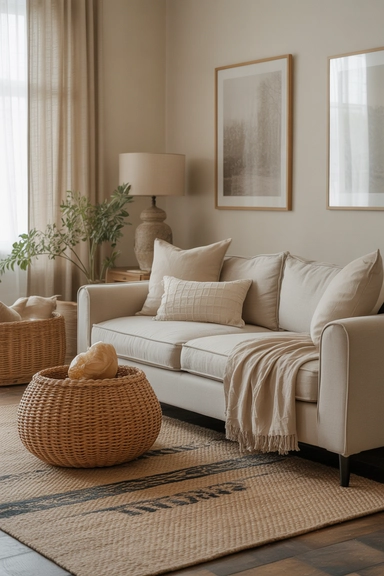
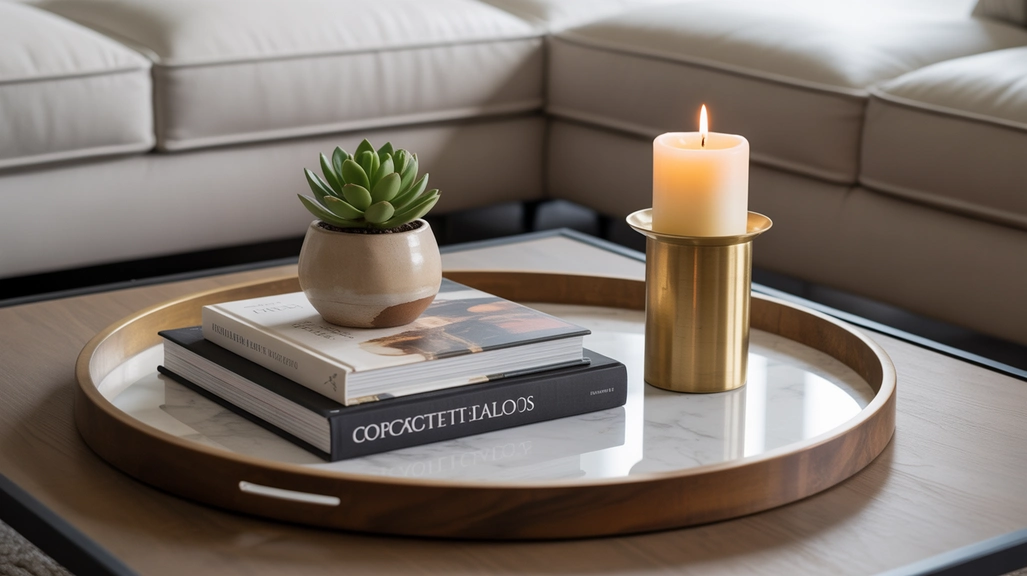
18 Living Room Tray Decor Ideas for a Clean, Polished Look
Introduction
Living room tray decor ideas offer a simple yet powerful way to bring order to frequently used surfaces, especially when paired with thoughtful living room coffee table decor ideas that prioritize balance and function. Trays help visually contain everyday items while adding structure to coffee tables, end tables, and console tables. When tray styling is overdone, however, it can feel cluttered instead of polished. Thoughtful tray decor is less about filling the tray and more about controlling scale, spacing, and purpose. The ideas below focus on tray styling that feels clean, practical, and visually balanced, helping the living room look organized and finished without appearing overstyled.
1. Limit Tray Decor to a Few Purposeful Items
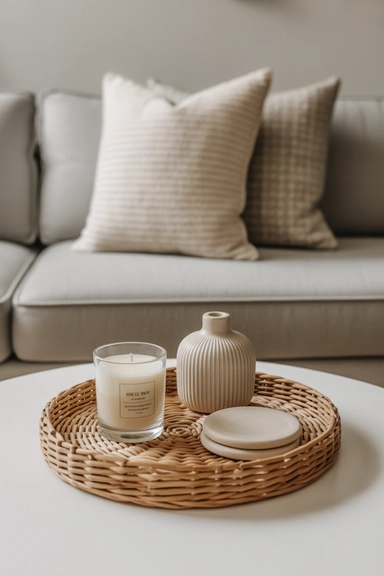
A tray works best when it holds only a small number of intentional items. Filling a tray with too many objects defeats its purpose and quickly creates visual clutter. Living room tray decor ideas benefit from restraint, using two or three pieces that serve either a functional or visual role. This keeps the tray feeling curated rather than crowded.
Fewer items also improve usability. When decor is minimal, the tray can still hold everyday essentials without constant rearranging. This balance allows the tray to look polished while remaining practical for daily living, which is essential in active living room spaces.
2. Match the Tray Size to the Surface Below
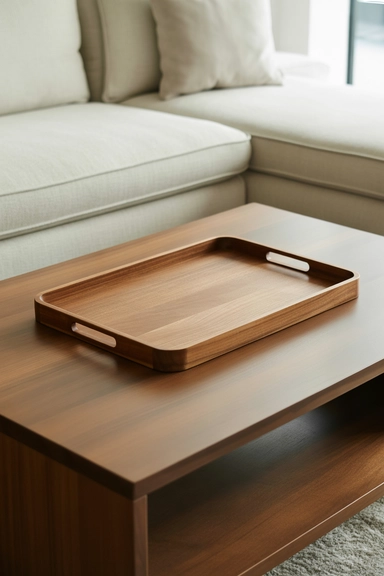
Tray size should always relate to the surface it sits on. A tray that is too large can overwhelm a table, while one that is too small may feel insignificant or cluttered by comparison. Living room tray decor ideas work best when the tray’s scale feels proportionate to the table, ottoman, or console beneath it.
Proper sizing creates visual harmony. When the tray fits comfortably within the surface, it feels intentional rather than added as an afterthought. This proportion helps the entire arrangement look balanced and thoughtfully designed.
3. Use One Functional Item as the Tray Anchor
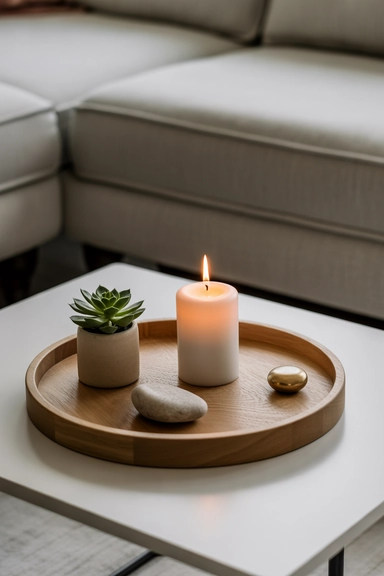
Every well-styled tray benefits from a functional anchor, such as a candle, small vase, or stack of coasters. This anchor establishes structure and gives the tray a clear focal point. Living room tray decor ideas feel more polished when function leads the arrangement instead of purely decorative filler.
Anchoring the tray with a useful item also reinforces practicality. When decor serves a purpose, it reduces the temptation to add unnecessary pieces. This approach keeps the tray visually calm while ensuring it remains genuinely useful.
4. Keep Height Variation Subtle and Controlled
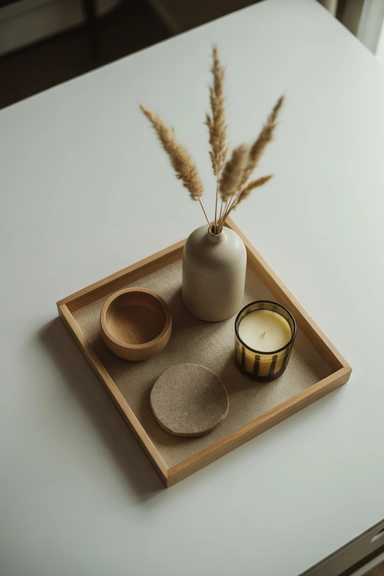
Height variation adds interest to tray decor, but too much contrast can feel busy. Mixing one medium-height item with one or two lower elements usually provides enough dimension. Living room tray decor ideas benefit from controlled height changes that feel intentional rather than random.
Keeping heights within a similar range also maintains sightlines across the room. When tray items remain visually contained, the tray feels integrated into the space instead of drawing unnecessary attention. This subtle balance supports a clean, polished look.
5. Leave Visible Space Inside the Tray
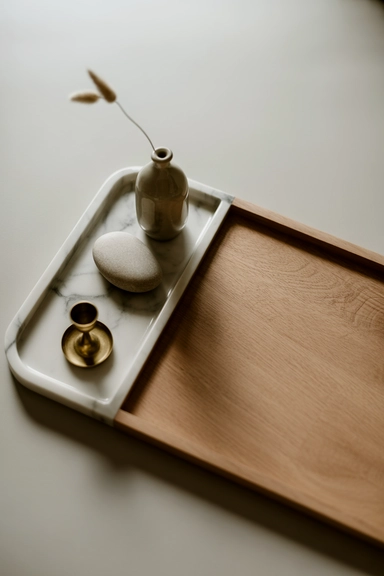
Negative space inside a tray is just as important as the items it holds. Leaving part of the tray surface visible prevents the arrangement from feeling cramped. Living room tray decor ideas that embrace open space feel lighter, calmer, and more refined.
Visible space also allows flexibility. When the tray is not completely filled, it can easily accommodate everyday items without disrupting the styling. This approach keeps the tray functional while maintaining a polished, uncluttered appearance.
6. Choose Tray Materials That Complement the Room
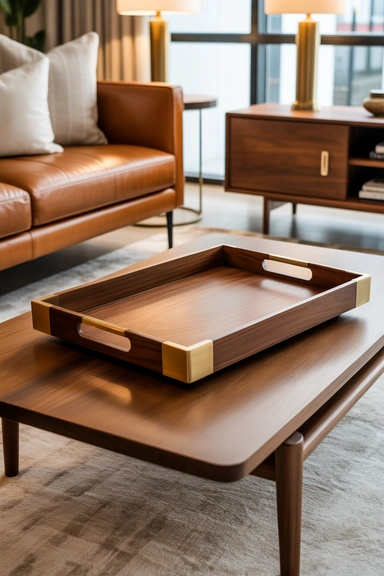
The material of a tray plays a major role in how polished it feels within the living room. A tray that clashes with nearby furniture or finishes can look out of place, even if the decor itself is minimal. Living room tray decor ideas work best when tray materials echo surrounding elements such as wood tones, metal finishes, or upholstery textures.
Material harmony creates cohesion. When the tray feels visually connected to the room, it blends naturally into the space rather than standing out as a separate styling element. This subtle alignment keeps the overall look calm and intentional.
7. Keep Color Choices Neutral and Cohesive
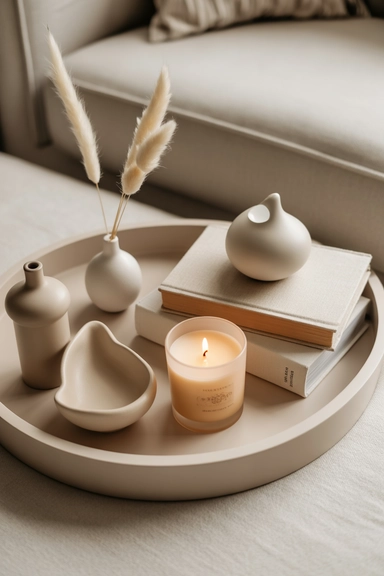
Color can quickly push tray decor from polished to cluttered if not controlled. Too many contrasting colors inside a small tray create visual noise. Living room tray decor ideas benefit from a neutral or closely related color palette that feels calm and cohesive.
Soft neutrals, muted tones, or tonal variations allow the tray to feel refined. When colors relate to each other, the arrangement looks intentional and easy on the eyes. This restraint helps the tray enhance the room without demanding attention.
8. Use Trays to Group Everyday Items Gracefully
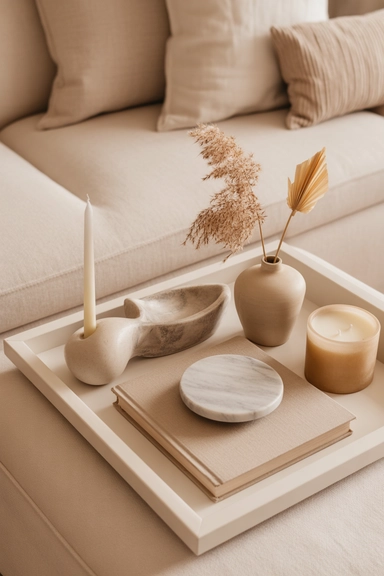
One of the main purposes of a tray is to organize everyday items in a visually pleasing way. Remotes, coasters, or small accessories can look messy when left loose. Living room tray decor ideas are most effective when trays are used to group these items neatly rather than hide them completely.
Grouping adds order without sacrificing accessibility. When everyday items are contained within a tray, the surface feels organized and polished. This approach keeps the living room functional while maintaining a clean, composed appearance.
9. Avoid Overdecorating the Tray With Decorative Objects
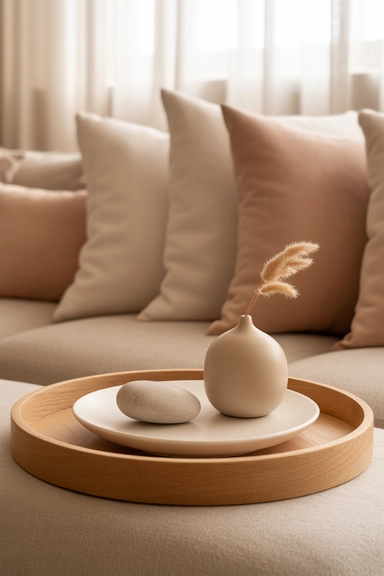
Decorative objects can enhance a tray, but too many quickly undermine its purpose. Filling a tray with purely decorative items can make it feel crowded and impractical. Living room tray decor ideas work best when decorative pieces are limited and carefully chosen.
A few well-selected accents are enough to add personality. When decorative objects are restrained, the tray remains functional and visually calm. This balance prevents the tray from becoming a cluttered display and keeps the styling polished.
10. Adjust Tray Styling Based on Table Size
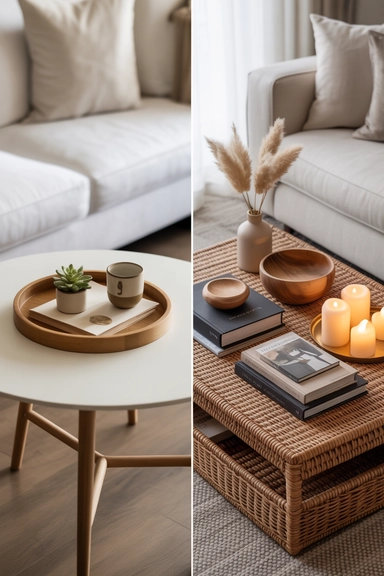
Tray styling should always respond to the size of the table it sits on. A small table requires a lighter, simpler tray arrangement, while a larger surface can support slightly more presence. Living room tray decor ideas feel more balanced when the tray and its contents are scaled appropriately to the table below.
Adjusting styling to table size prevents visual overload. When proportion is handled thoughtfully, the tray feels supportive rather than dominant. This ensures a polished look across different living room surfaces.
11. Let One Item Lead the Tray Visually
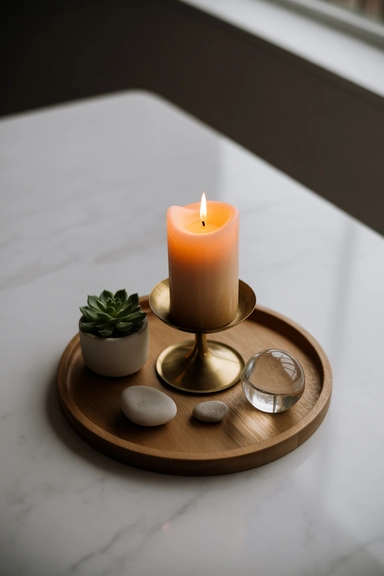
A tray looks most polished when one item clearly leads the arrangement. When multiple pieces compete for attention, even a small tray can feel cluttered. Living room tray decor ideas work best when one element—such as a candle, small vase, or sculptural object—acts as the visual anchor, with other items supporting it quietly.
This hierarchy makes the tray easier to read at a glance. The eye settles naturally on the leading item, then moves to smaller accents. When visual roles are clear, the tray feels intentional and refined rather than busy or overstyled.
12. Keep Tray Decor Low for Clear Sightlines
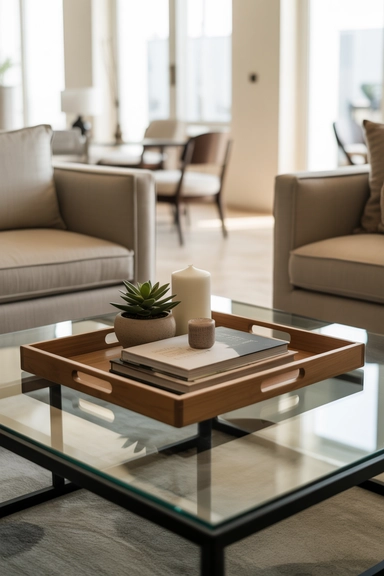
Trays often sit on coffee tables or ottomans where sightlines matter. Tall items can block views across the room and make the space feel visually closed. Living room tray decor ideas benefit from keeping most items low-profile, especially in central seating areas.
Lower decor maintains openness and comfort. It allows the tray to organize items without interrupting visual flow or conversation. This approach supports a clean, polished look while keeping the living room feeling spacious and welcoming.
13. Use Texture to Add Depth Without Adding Clutter
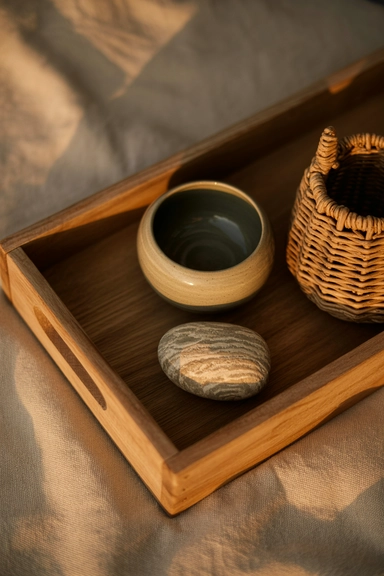
Texture is an effective way to add interest to tray decor without increasing the number of items. Materials like ceramic, wood, stone, or woven fibers introduce richness through surface detail. Living room tray decor ideas often rely on texture to keep arrangements engaging while remaining minimal.
A textured object can stand on its own visually. This reduces the need for extra decor and helps the tray feel curated instead of crowded. Texture-driven styling keeps the look calm, layered, and refined.
14. Refresh Tray Decor Seasonally, Not Constantly
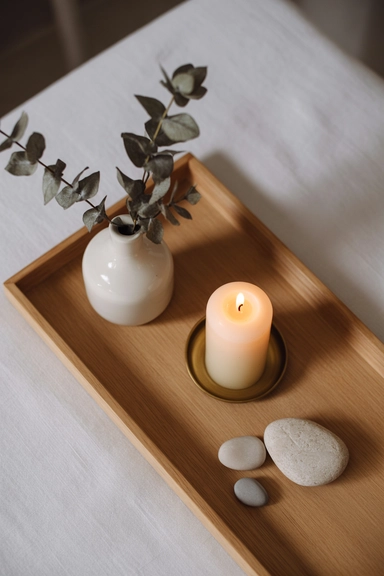
Tray decor is easy to update, but frequent changes can lead to unnecessary clutter. Living room tray decor ideas work best when trays are refreshed occasionally rather than constantly restyled. Small seasonal adjustments keep the look current without overwhelming the surface.
Limiting updates also encourages restraint. When changes are intentional, each item feels purposeful. This approach maintains a polished appearance while preventing the tray from becoming a rotating collection of excess decor.
15. Leave the Tray Easy to Clear When Needed
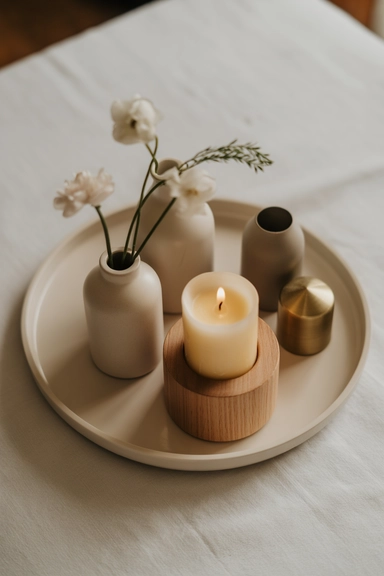
A tray should never be so styled that it becomes impractical. When items are difficult to move, the tray stops serving its purpose. Living room tray decor ideas are most successful when the tray can be cleared quickly without disrupting the overall arrangement.
An easy-to-clear tray supports everyday living. When flexibility is built into the styling, the tray remains useful and visually calm. This balance ensures the living room stays functional while looking thoughtfully finished.
16. Match Tray Styling to the Table’s Function
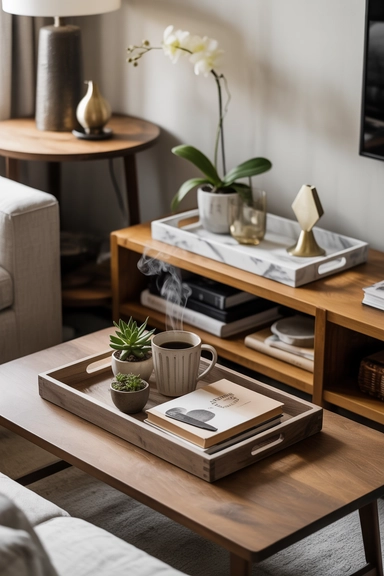
A tray should always reflect how the surface beneath it is used. A coffee table tray may need to balance decor with everyday items, while a console or ottoman tray can lean more decorative. Living room tray decor ideas feel most polished when tray styling aligns with the table’s role rather than following a one-size-fits-all approach.
When function guides styling decisions, the tray looks intentional and practical. This prevents overdecorating and ensures the tray enhances daily living instead of getting in the way. A functional match keeps the living room feeling organized and effortless.
17. Keep Tray Decor Proportional to the Space
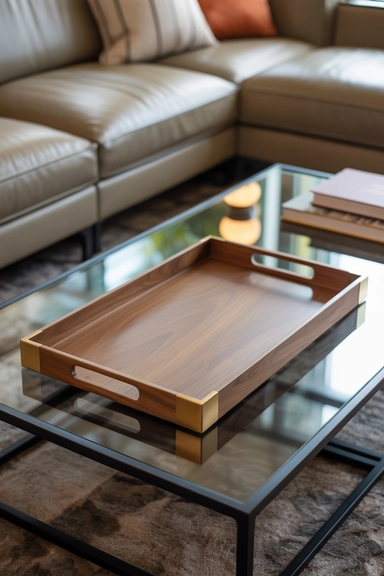
Tray decor should feel appropriate not just to the table, but to the room as a whole. Overly bold trays or heavy decor can dominate a small space, while delicate arrangements may feel lost in larger rooms. Living room tray decor ideas work best when proportion is considered in relation to surrounding furniture and layout.
Balanced proportions help the tray blend naturally into the room. When scale feels right, the tray supports the overall design instead of competing with it. This thoughtful sizing contributes to a calm, cohesive living room aesthetic.
18. Stop Styling Before the Tray Feels Full
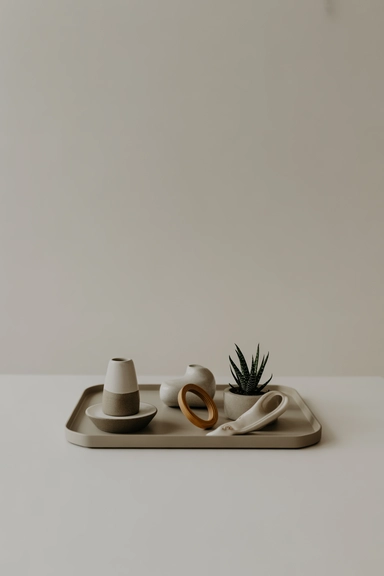
One of the simplest ways to achieve a clean, polished look is to stop adding items before the tray feels complete. When a tray looks finished but still has visible space, balance has likely been achieved. Living room tray decor ideas succeed when restraint guides the final decision.
Leaving room allows the tray to breathe visually. It keeps the arrangement flexible and prevents clutter from building over time. This mindset ensures the tray remains elegant, functional, and easy to live with.
Conclusion
Living room tray decor ideas are most effective when they prioritize restraint, proportion, and purpose. By limiting items, controlling height, and allowing negative space, trays can organize surfaces without creating visual clutter. These ideas focus on clarity rather than excess, helping trays feel polished and practical at the same time. When tray decor is styled intentionally and refreshed thoughtfully, it enhances the living room quietly, contributing to a space that feels balanced, organized, and comfortably finished.