22 Japandi Living Room Design Ideas for Warm Minimal Style
Introduction
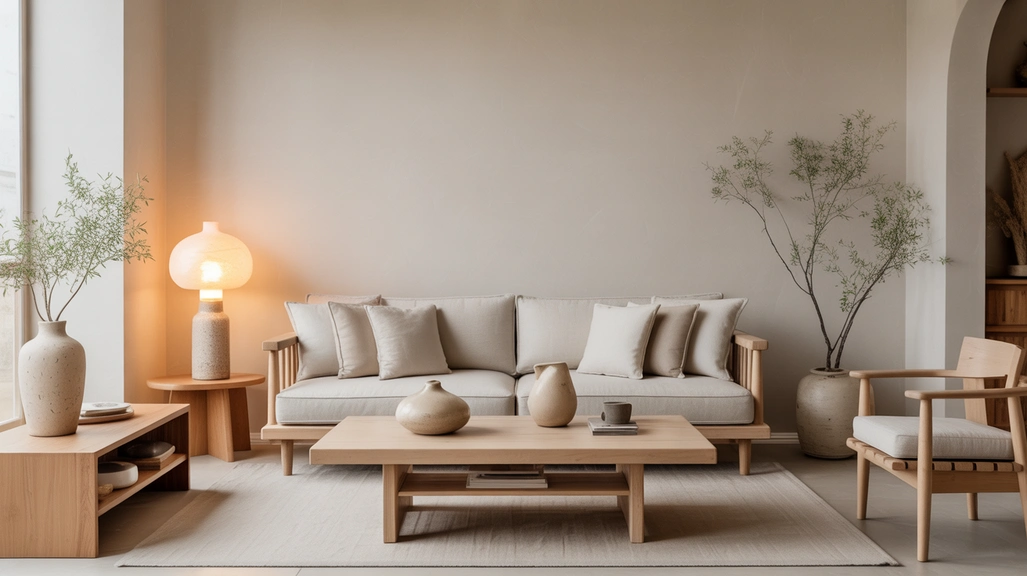
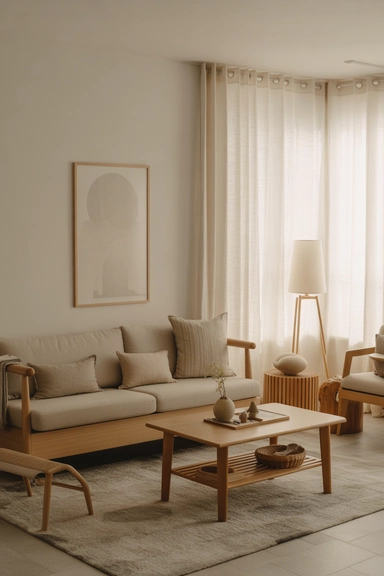
Japandi living room design blends Scandinavian warmth with Japanese calm, creating spaces that feel soft, grounded, and effortlessly refined. Natural textures, light wood tones, and warm minimal styling work together to form an atmosphere that’s both cozy and thoughtfully organized. Soft light enhances every surface, revealing the quiet elegance that defines this aesthetic.
As these Japandi living room design ideas unfold, they highlight comfort, balance, and intentional simplicity—offering a peaceful home environment that feels warm, modern, and beautifully connected to nature.
For more inspiration on creating warm, cozy minimal spaces, you can explore our cozy Scandinavian living room ideas.
1. Light Wood Tones That Create Warm Balance
Light wood tones form the foundation of warm minimal Japandi interiors, adding natural brightness without overwhelming the room. Oak, ash, or birch introduce gentle contrast against soft neutral walls, creating a calming balance that feels both modern and timeless. These tones pair effortlessly with linen, stone, and ceramic textures, shaping an environment that feels light, open, and serene. Their natural warmth softens minimalism, bringing emotional comfort into the living room.
As sunlight moves across the wood, subtle grains and organic patterns emerge, adding depth and understated elegance. The warmth of these tones enhances the cozy, lived-in feeling that defines Japandi living room design ideas, creating a space that feels naturally harmonious. Light wood pieces also allow furniture to blend seamlessly into the room’s soft palette, reinforcing the calm flow essential to this style.
To explore more light wood styling and soft Scandinavian warmth, you can check out our cozy Nordic living room ideas.
2. Japandi Living Room Design Ideas With Soft Neutral Palettes
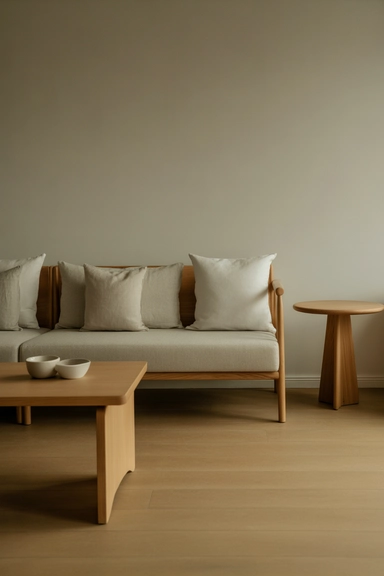
Soft neutral palettes are essential to Japandi living room design ideas, allowing the room to feel warm, inviting, and effortlessly minimal. Warm white, beige, soft greige, and muted taupe create a gentle visual foundation that supports the calm atmosphere. These shades enhance natural textures, making linen fabrics, wooden surfaces, and stone accents feel richer and more tactile. The palette encourages peacefulness while giving the room room tone consistency.
When daylight meets these quiet hues, they produce soft gradients that shift with the time of day. Shadows soften, textures gain depth, and the overall mood becomes warm and tranquil. The harmony of these neutrals makes the living room feel cohesive and grounded without relying on bold contrasts. Soft palettes allow every element to breathe, creating a serene environment where warmth and minimalism coexist beautifully.
3. Minimalist Furniture That Supports Cozy Simplicity
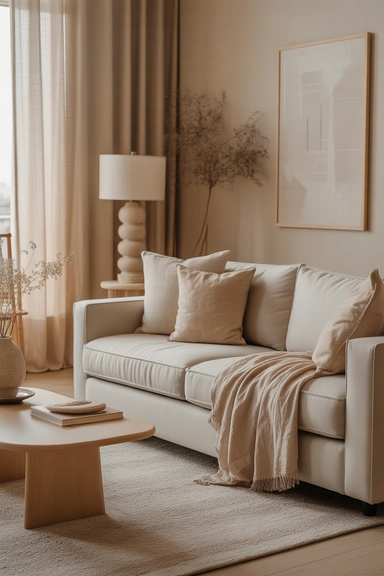
Minimalist furniture defines the flow of a Japandi living room by emphasizing function, comfort, and clean form. Low sofas, simple wooden benches, and smooth-edged tables contribute to a sense of grounded calm. Their understated silhouettes allow natural materials and warm textures to shine without overwhelming the space. The furniture creates an effortless balance between Japanese restraint and Scandinavian coziness, allowing the room to feel open and peaceful.
As natural light touches the furniture’s surfaces, subtle textures reveal themselves in soft, warm tones. This gentle interaction enhances the cozy minimal style that characterizes Japandi living room design ideas. Each piece feels intentional rather than decorative, supporting quiet comfort and harmony. The simplicity of the furniture encourages a sense of spaciousness, making the living room feel calm, uncluttered, and welcoming.
4. Layered Textures for Warm Minimal Depth
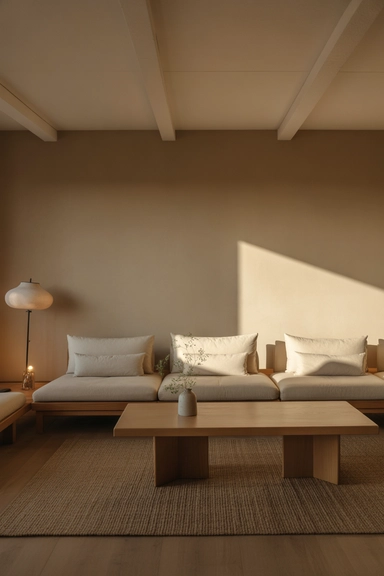
Layered textures give the living room warmth while keeping the minimal aesthetic clean and restrained. Linen, wool, cotton, and soft knits bring gentle variation without overwhelming the calm palette. These materials add tactile comfort, enhancing the emotional softness that defines Japandi style. Each texture contributes subtle depth, creating a space that feels intentional, cozy, and quietly refined.
When natural light hits layered textiles, soft shadows and highlights create a sense of warmth and movement. These variations enrich the minimal setting, making it feel more inviting and expressive. Layered textures also balance smooth wood surfaces and ceramic details, reinforcing the serene atmosphere. This harmony between warmth and simplicity brings Japandi living room design ideas to life in a grounded, calming way.
For more inspiration on layering natural textures and warm earthy materials, you can explore our cozy earthy living room ideas.
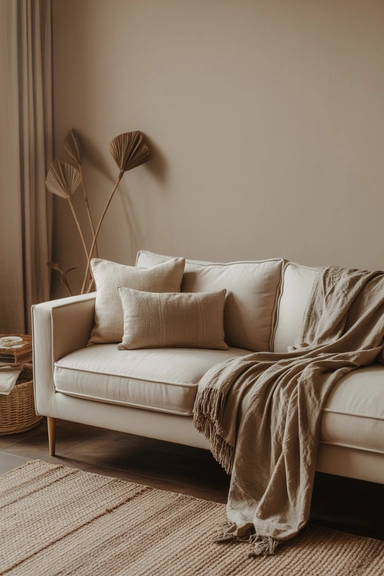
5. Organic Shapes That Soften Minimal Lines
Organic shapes bring gentle movement to the living room, softening the clean lines that anchor minimal design. Rounded tables, curved armchairs, sculptural vases, and softly tapered décor pieces introduce a natural flow that feels calming and grounded. These forms mimic elements of nature, allowing the space to feel more human and emotionally warm. Their presence enhances balance without disrupting the serenity of the layout.
As daylight touches these organic silhouettes, subtle shadows highlight their softness and natural contours. This creates a soothing visual rhythm that enriches the warm minimal aesthetic. Organic forms pair beautifully with Japandi’s light woods and neutral palette, helping the room feel both refined and approachable. They support the emotive presence that defines Japandi living room design ideas, offering visual ease and effortless harmony.
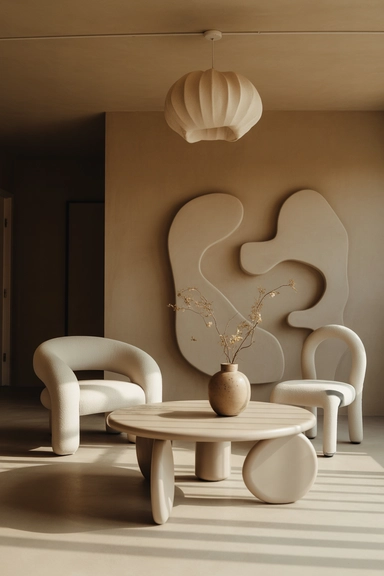
6. Japandi Living Room Design Ideas With Natural Materials
Natural materials are central to the authenticity of Japandi living room design ideas, creating a grounded environment rooted in simplicity. Oak wood, rattan, bamboo, linen, wool, stone, and ceramic surfaces all contribute organic character and softness. Their raw beauty makes the room feel timeless, comfortable, and deeply connected to nature. These materials age gracefully, becoming warmer and more expressive over time.
Light interacts beautifully with natural materials, revealing subtle grains, textures, and handcrafted details. These variations make the space feel lived in, intentional, and emotionally calming. Natural materials help maintain the delicate balance between Japanese restraint and Scandinavian warmth, reinforcing the style’s warm minimal foundation. They create a tactile, sensory environment that feels both peaceful and aesthetically rich.
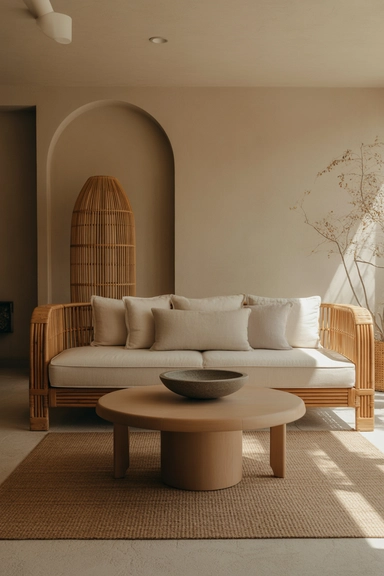
7. Soft Lighting for a Warm, Cozy Atmosphere
Soft lighting plays a crucial role in creating the warm minimal mood at the heart of Japandi design. Linen-shaded lamps, warm-white bulbs, and diffused sconces illuminate the room gently, allowing shadows to fall in a calming, natural rhythm. This type of lighting softens the straight lines of furniture and highlights the textures of wood, textile, and ceramic elements. It creates an atmosphere that feels peaceful and emotionally grounding.
As the light interacts with natural materials, subtle highlights emerge that enhance the cozy, lived-in feeling of the room. This interplay brings depth to the neutral palette, making each surface appear warm and inviting. Soft lighting also supports the functional calm that defines Japandi living room design ideas, encouraging relaxation while maintaining a sense of visual clarity and balance throughout the space.
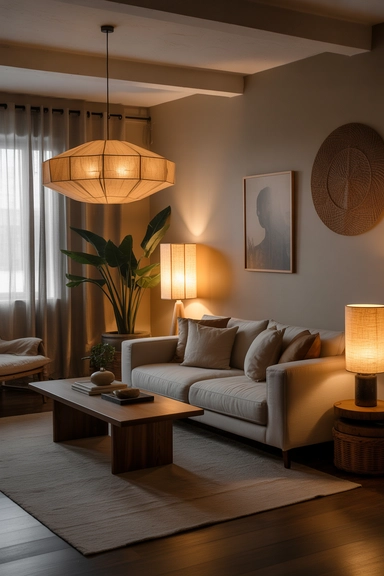
8. Clean Lines That Support Warm Minimal Simplicity
Clean lines are essential to the serene balance of Japandi design, giving the living room structure without sacrificing warmth. Smooth-edged furniture, simple cabinetry, and gently tapered silhouettes create a visually quiet environment. These understated forms emphasize function and calm, helping the room stay open and uncluttered. Their clarity allows natural materials and soft textures to stand out with subtle elegance.
When light moves across clean-lined furniture, it emphasizes the harmony between precision and warmth. The simplicity of these shapes prevents the room from feeling busy, even with layered textures and cozy elements. Clean lines provide a stable framework for Japandi living room design ideas, making the space feel organized, peaceful, and thoughtfully composed.
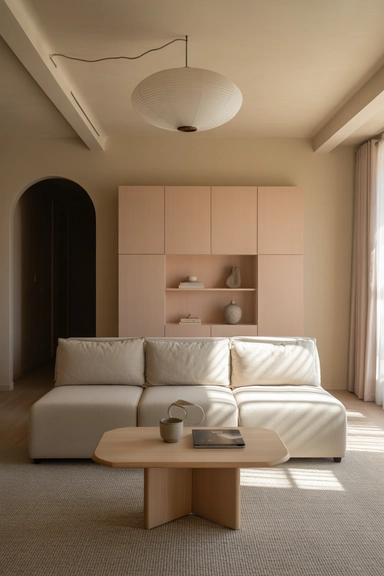
9. Warm Neutral Palettes That Feel Cozy and Natural
Warm neutral palettes are central to Japandi living room design ideas, offering a gentle foundation that feels both comforting and refined. Shades of beige, sand, ecru, warm white, and muted greige come together to create an inviting base. These hues support a tranquil environment, reinforcing the aesthetic’s focus on calm, natural beauty. Each shade feels soft and grounding, making the room visually warm without overwhelming it.
Under natural light, warm neutrals reveal subtle depth and gentle tone shifts that enrich the space. These quiet variations pair beautifully with light wood, ceramic accents, and natural fibers. The palette also enhances the organic shapes and textures that define Japandi style, creating a cohesive, soothing environment. Warm neutrals embody the understated comfort that makes this aesthetic so appealing.
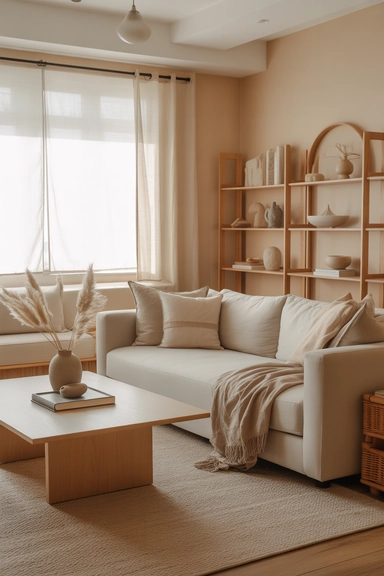
10. Low Seating That Encourages Relaxed Comfort
Low seating helps create the grounded, calming presence that defines Japandi interiors. Sofas with low profiles, floor cushions, and simple wooden benches encourage relaxed posture and a slower pace of living. This approach creates a welcoming environment where comfort feels effortless and natural. The lowered perspective also allows the eye to travel smoothly across the room, emphasizing open space and harmonious flow.
As light settles across low seating, it softly highlights the surrounding textures—woven rugs, smooth wood, and linen upholstery. These interactions make the room feel warm and approachable, reinforcing the cozy minimal aesthetic. Low seating embodies the balance between Japanese restraint and Scandinavian comfort, bringing depth and tranquility to Japandi living room design ideas.
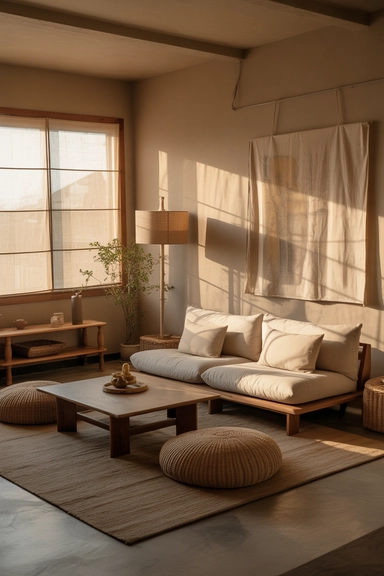
11. Functional Storage That Maintains Visual Calm
Functional storage supports the clean, uncluttered look essential to Japandi style. Closed cabinets, low-profile sideboards, woven baskets, and simple shelving systems create order without drawing attention. This minimalist approach keeps the room visually peaceful, allowing natural textures and warm tones to take center stage. Storage becomes part of the design, blending seamlessly with the room’s material palette and soft color scheme.
When light moves across smooth cabinet fronts and natural baskets, it highlights their subtle textures, reinforcing the room’s calm rhythm. Thoughtful storage solutions reduce visual noise, making the living room feel more spacious and emotionally grounded. This intentional organization supports the warm minimal foundation of Japandi living room design ideas, offering clarity without sacrificing comfort.
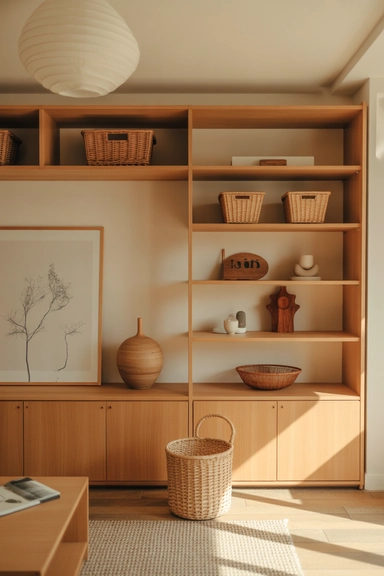
12. Japandi Living Room Design Ideas With Natural Decor
Natural décor deepens the connection to organic beauty that defines Japandi interiors. Ceramic vases, stone bowls, wooden vessels, and dried botanicals introduce quiet elegance while maintaining simplicity. These elements add warmth and authenticity, grounding the space in natural texture and soft, earthy tones. Their presence enhances the sensory experience, making the room feel lived in and intentionally curated.
As daylight drifts across natural décor, each piece reveals subtle details—matte finishes, raw edges, and organic shapes that reflect craftsmanship. This gentle variation brings emotional warmth and soft sophistication to the room. Natural décor supports the blended character of Japandi living room design ideas, enriching the environment with calm, earthy expression.
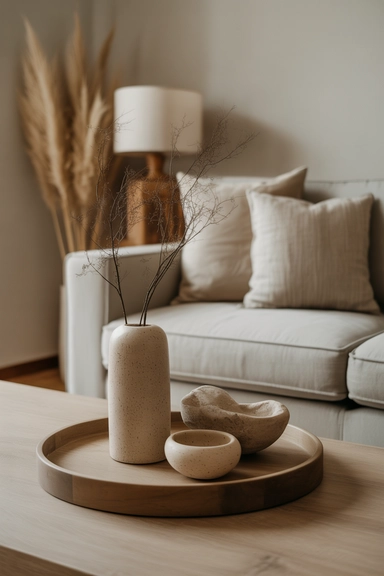
13. Balanced Symmetry for a Calm, Organized Look
Balanced symmetry supports the quiet structure that gives Japandi interiors their calming presence. Paired furniture, evenly spaced décor, and harmonized proportions help the room feel intentional while remaining cozy. This thoughtful arrangement encourages visual stability without becoming rigid, allowing warm materials and textures to remain the focus. The symmetry creates a soothing flow that enhances the sense of spaciousness in the living room.
As natural light falls across symmetrical arrangements, it highlights the gentle alignment of shapes and forms, reinforcing visual harmony. The balanced setup also allows organic elements—like curved ceramics or soft textiles—to stand out against the structured layout. This blend of order and warmth supports the emotional clarity at the heart of Japandi living room design ideas, grounding the space in comfort and elegance.
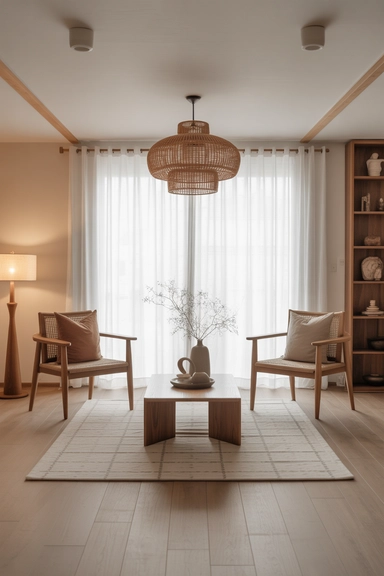
14. Layered Rugs That Add Texture and Warmth
Layered rugs bring tactile comfort to Japandi interiors, introducing soft warmth without disrupting minimalism. Jute, wool, and cotton rugs create a gentle foundation that feels inviting underfoot while enriching the room’s natural character. Their subtle patterns and tones add dimension to the living room, supporting the cozy minimal aesthetic. Layering also helps define specific areas without relying on heavy décor or bold contrasts.
When sunlight grazes the textured layers, it reveals depth and softness that enhance the room’s calm mood. The blend of materials feels natural and balanced, complementing light wood furniture and soft neutral palettes. Layered rugs contribute to the warm minimal spirit of Japandi living room design ideas by adding coziness in an understated, intentional way.
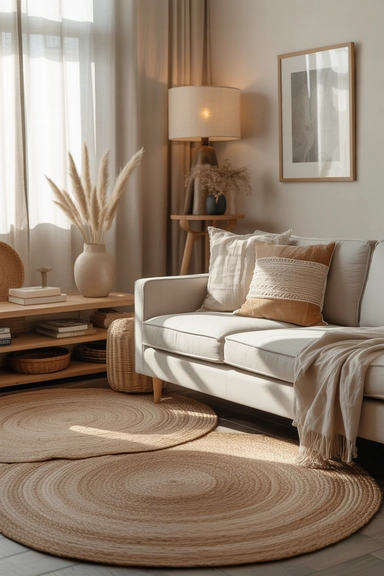
15. Indoor Greenery That Feels Soft and Minimal
Indoor greenery adds freshness and gentle movement to Japandi living rooms, supporting the style’s connection to nature. Soft-leaf plants, bonsai trees, and simple potted arrangements bring organic beauty without overwhelming the minimal design. Their subtle curves and muted tones enhance the room’s calm atmosphere while maintaining simplicity. Greenery also balances warm wood and soft textiles, enriching the space with a touch of life.
As light filters across the leaves, soft shadows shift throughout the room, adding dimension and sensory warmth. The presence of greenery deepens the natural harmony central to Japandi living room design ideas, reinforcing the aesthetic’s peaceful foundation. Plants introduce gentle color that remains understated, helping the room feel balanced, serene, and effortlessly inviting.
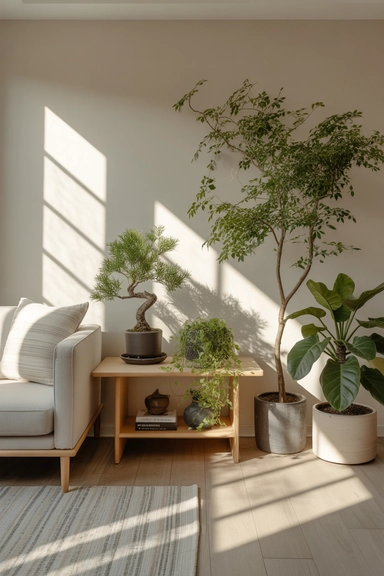
16. Warm Accents That Add Subtle Contrast
Warm accents introduce gentle contrast to the Japandi living room without breaking the calm minimal mood. Soft terracotta, muted clay, warm bronze, or pale caramel tones add depth while staying true to the earthy palette. These accents support the warm minimal style by creating moments of visual interest that feel natural rather than bold. They help the room feel collected, balanced, and quietly expressive.
As sunlight touches these warm accents, the tones soften and diffuse, enhancing the cozy elegance of the space. Their subtle presence blends seamlessly with wood grains, natural fibers, and neutral upholstery, enriching the layered warmth Japandi is known for. Warm accents elevate Japandi living room design ideas by introducing harmony, subtle richness, and emotional warmth without overpowering the minimalist foundation.
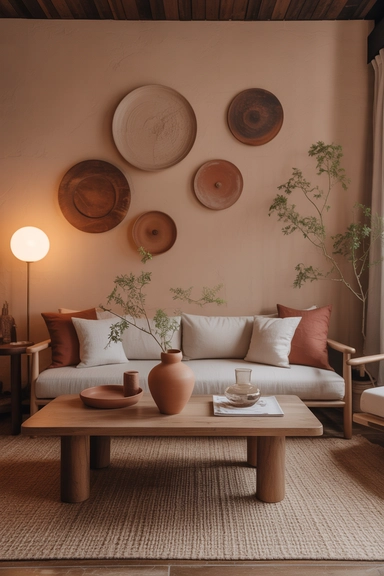
17. Soft Fabrics That Enhance Cozy Minimal Comfort
Soft fabrics strengthen the welcoming warmth of Japandi interiors by adding tactile comfort to minimal forms. Linen throws, cotton cushions, wool blankets, and textured upholstery support a cozy atmosphere without losing the clean visual clarity of the style. These fabrics blend seamlessly with natural materials, enhancing the room’s organic flow. Their softness comforts both visually and physically, making the living room feel gentle and approachable.
When natural light drifts across the fabrics, soft highlights and shadows emphasize their textures, bringing warmth and depth. These interactions help soften structured furniture and smooth surfaces, creating a serene balance. Soft fabrics enrich Japandi living room design ideas by enhancing emotional coziness while supporting the minimal, grounded aesthetic that defines the style.
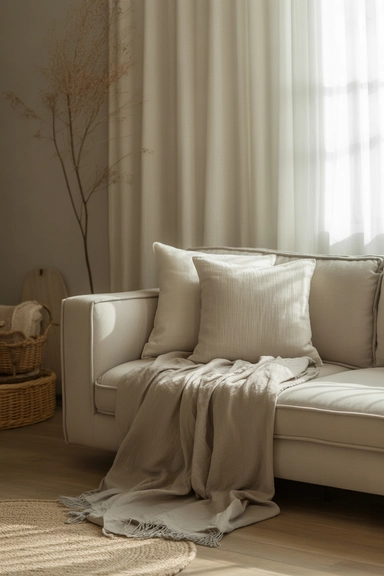
18. Japandi Living Room Design Ideas With Handmade Pieces
Handmade pieces bring authenticity and soulful character to Japandi interiors. Sculptural ceramics, handwoven baskets, pottery bowls, and carved wooden objects add unique charm rooted in craftsmanship. Their subtle irregularities reflect the natural beauty of imperfection, enhancing the warm minimal aesthetic. These handcrafted elements support the idea of intentional living, allowing the room to feel meaningful and thoughtfully curated.
As soft light rests on handmade pieces, their textures and shapes reveal quiet details that deepen the room’s organic mood. Each object creates a gentle focal point without disturbing the clean, minimal flow. Handmade pieces enrich Japandi living room design ideas by bridging simplicity with warmth, making the environment feel personal, grounded, and emotionally engaging.
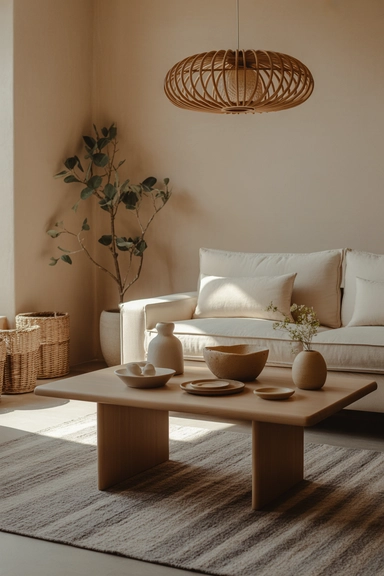
19. Thoughtful Accessories That Keep the Room Minimal
Thoughtful accessories help preserve the warm minimal balance at the heart of Japandi interiors. A curated selection of ceramics, wooden bowls, woven baskets, or a single sculptural vase adds character without overwhelming the space. Each piece is chosen intentionally, allowing the room to feel expressive yet uncluttered. These subtle accents support harmony and calm, avoiding visual noise while enhancing the natural warmth of the living room.
As light moves across these accessories, gentle reflections and shadows reveal their textures and understated beauty. The simplicity of each object encourages mindful appreciation, bringing emotional depth into the room. Thoughtful accessories support Japandi living room design ideas by reinforcing a sense of calm intention and refined restraint, allowing the space to breathe with elegance and warmth.
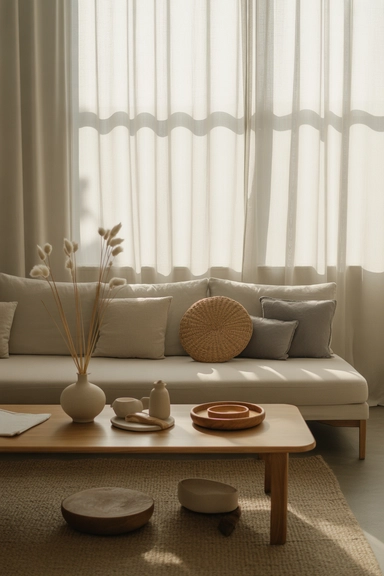
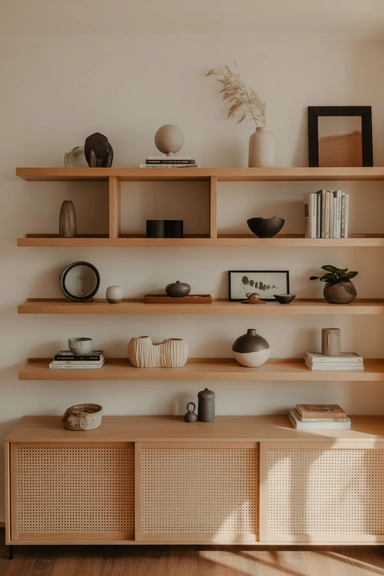
20. Floating Shelves That Highlight Minimal Displays
Floating shelves offer a clean, modern way to showcase minimal décor in a Japandi living room. Their simple lines and light wood tones blend effortlessly into the room, creating display space without adding heaviness. These shelves highlight carefully chosen pieces—ceramics, books, or small natural elements—while maintaining a visually open atmosphere. Their gentle presence reinforces the balance between function and aesthetic calm.
When soft daylight reaches the shelves, it amplifies the textures of wood, pottery, and natural materials placed on them. This quiet illumination creates subtle moments of visual interest that feel warm and serene. Floating shelves enhance Japandi living room design ideas by offering structure without clutter, supporting a curated and harmonious environment that feels both practical and beautiful.
21. Subtle Patterns That Add Quiet Dimension
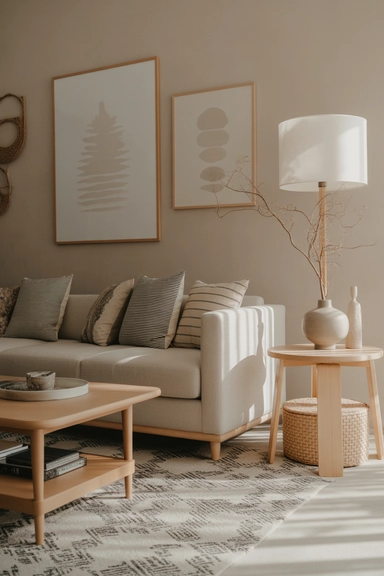
Subtle patterns introduce gentle movement without disrupting Japandi’s warm minimal foundation. Soft stripes, tonal weaves, or faint geometric textures add depth while remaining calm and understated. These patterns enhance natural fibers and textiles, bringing quiet dimension to rugs, cushions, or simple upholstery. Their muted presence supports the serene atmosphere, enriching the space without drawing attention away from natural materials and warm tones.
Under natural light, these subtle patterns reveal delicate shifts in texture that soften the room’s visual rhythm. The understated designs make the living room feel more tactile and inviting without compromising the clean aesthetic. Subtle patterns support Japandi living room design ideas by offering nuance and warmth, creating a layered yet peaceful environment grounded in minimal beauty.
22. Scent and Sound That Complete Warm Minimal Living
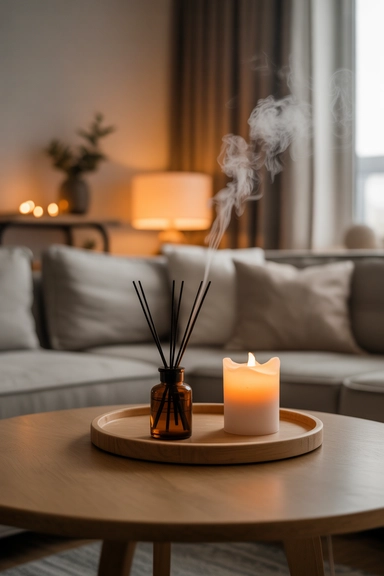
Scent and sound deepen the emotional experience of a Japandi living room, adding sensory warmth to the minimal design. Soft aromas from cedarwood, sandalwood, or natural essential oils blend with gentle background sounds like quiet instrumental music or flowing water. These elements support the atmosphere of calm, turning the living room into a peaceful retreat that encourages slow living and mindful presence.
As these subtle sensory layers fill the space, they interact with natural textures, warm lighting, and soft neutral tones. The result is a room that feels comforting, grounded, and emotionally cohesive. Scent and sound complete Japandi living room design ideas by enhancing the environment beyond visuals, creating a home that feels serene, warm, and deeply nurturing.
Conclusion
Japandi living room design offers a warm minimal approach that blends natural materials, soft textures, and thoughtful simplicity. As light wood tones, organic shapes, and cozy neutrals come together, the space feels calm, balanced, and deeply inviting.
These ideas support a comfortable lifestyle rooted in intentional living and grounded beauty. With its gentle warmth and serene aesthetic, Japandi living room design creates a home environment that feels peaceful, modern, and emotionally connected.