21 Smart Rental Friendly Living Room Decor Ideas That Work With Lease Restrictions
Introduction
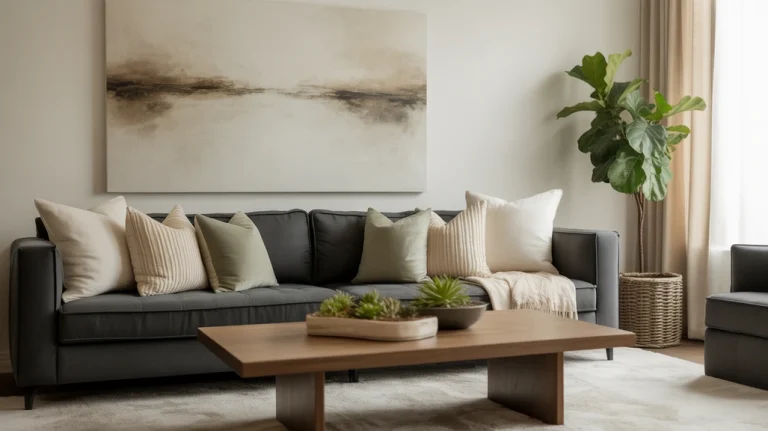
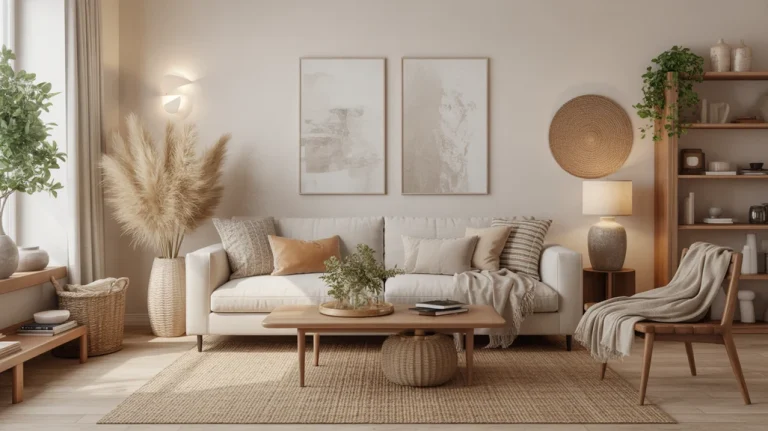
Rental-friendly living room decor ideas focus on working within fixed boundaries rather than resisting them. Most rental spaces come with strict rules around drilling, painting, and permanent alterations, which often leaves renters feeling limited or stuck with uninspiring interiors. The mistake many people make is treating these rules as creative blockers instead of design constraints that guide smarter decisions—an issue also common in apartment living room decor ideas for small spaces, where flexibility matters more than finishes. When decor choices respond to lease restrictions thoughtfully, the living room can feel cohesive, comfortable, and intentional. Strategic use of furniture placement, removable elements, lighting, and textiles—principles often seen in cozy living room decor ideas —allows renters to create a finished space that reflects personal taste without risking deposits or violating agreements.
1. Rental-Friendly Living Room Decor Ideas That Rely on Area Rugs for Visual Structure
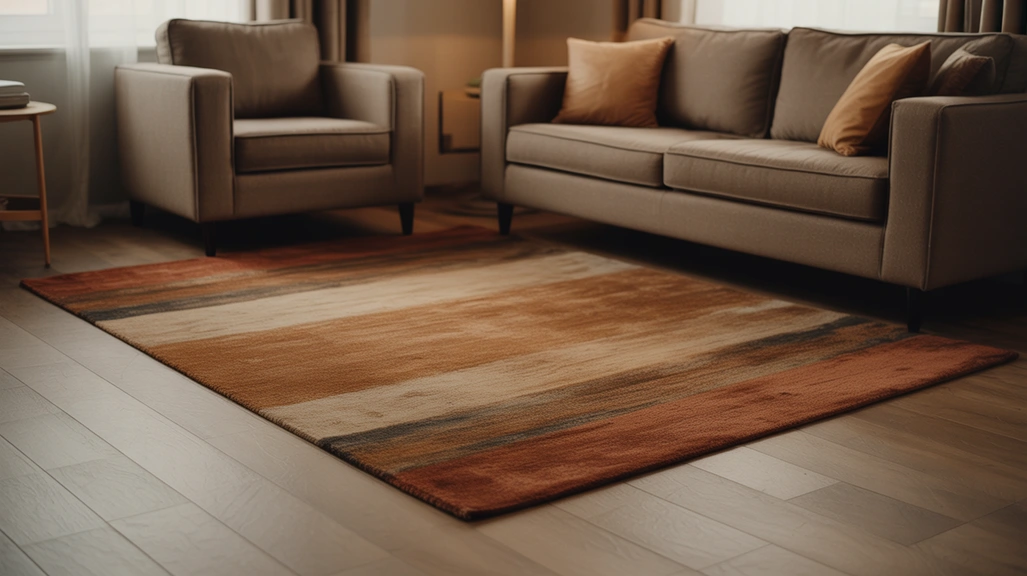
Area rugs are one of the most effective rental-friendly living room decor ideas because they redefine space without altering floors. Many rentals have neutral tile, laminate, or aging carpet that visually dominates the room and makes furniture feel disconnected. A well-sized rug anchors the seating arrangement, establishes boundaries, and adds warmth without requiring adhesive or installation. The key is proportion; a rug that is too small makes the space feel temporary, while one that extends under the front legs of sofas and chairs creates a grounded, intentional layout.
Beyond aesthetics, rugs also solve functional problems common in rentals. They absorb sound in echo-prone rooms, add comfort underfoot, and visually soften sharp architectural lines. Choosing low-pile or flat-weave options makes them easier to clean and reposition when moving out. Neutral or lightly patterned rugs age better and adapt to future furniture changes, which matters in temporary homes. When chosen carefully, a rug becomes the foundation of the room rather than a decorative afterthought.
2. Adding Character With Removable Wall Treatments That Leave No Marks
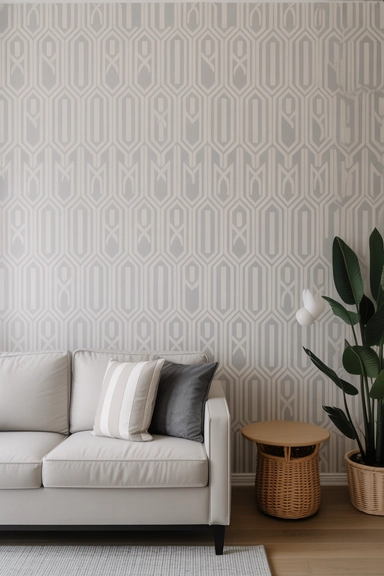
Removable wall treatments are rental-friendly living room decor ideas that allow visual change without permanent commitment. Peel-and-stick wallpaper, fabric wall decals, and removable murals provide depth and interest while respecting lease rules. These options work particularly well on accent walls, behind sofas, or in awkward nooks that feel unfinished. The goal is not to cover every surface, but to create one visual anchor that draws attention away from builder-grade finishes and standard paint colors commonly found in rentals.
Successful application depends on surface preparation and restraint. Walls should be clean and smooth to avoid peeling issues, and designs should be chosen with scale in mind. Overly busy patterns can overwhelm small living rooms and feel temporary rather than polished. Subtle textures, soft geometrics, or muted botanical prints tend to blend better with furniture and lighting. When removed properly, these treatments leave no residue, making them ideal for renters who want personality without long-term risk.
3. Building Atmosphere Through Layered Lighting Instead of Overhead Fixtures
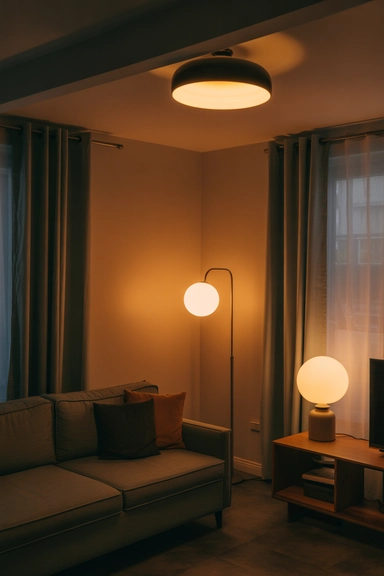
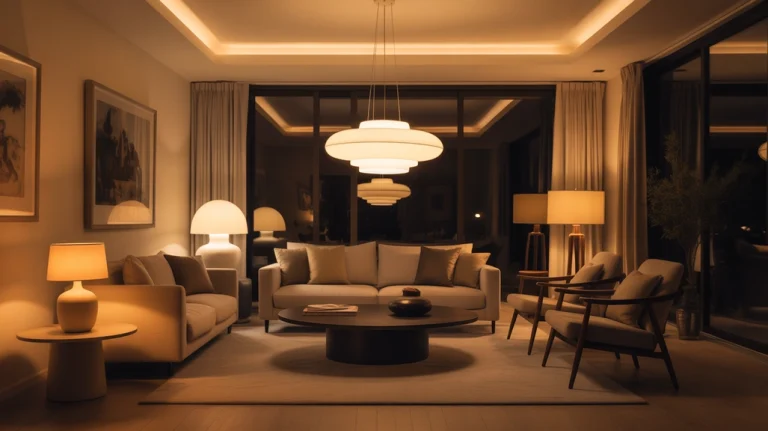
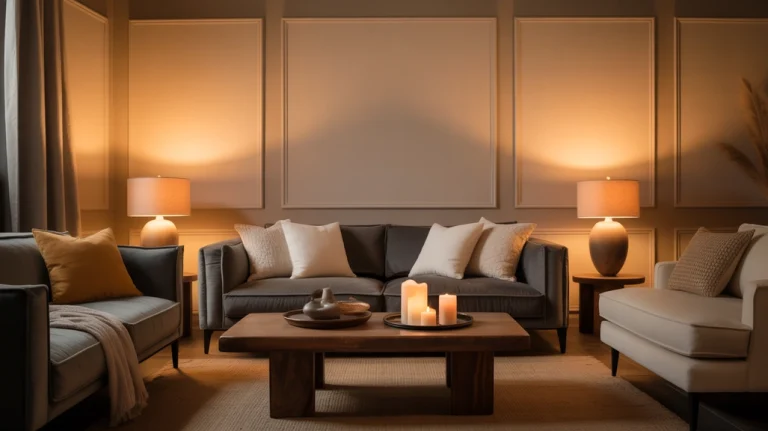
Lighting is often overlooked in rental-friendly living room decor ideas, yet it has the greatest impact on atmosphere without altering structure. Most rentals rely on a single overhead fixture that casts harsh, flat light across the room. Introducing layered lighting through floor lamps, table lamps, and plug-in sconces creates depth and control. This approach allows renters to define seating zones, highlight textures, and soften the overall mood without touching wiring or ceilings.
The placement of lighting matters more than the fixture style. Floor lamps positioned near sofas create intimacy, while table lamps on sideboards or shelves add visual rhythm. Warm-toned bulbs reduce the clinical feel of standard rental lighting and make the space more inviting in the evenings. Using multiple light sources at different heights gives flexibility, allowing the room to adapt from daytime function to relaxed nighttime use without any permanent installation.
4. Improving Flow by Reworking Furniture Placement, Not Buying More Decor
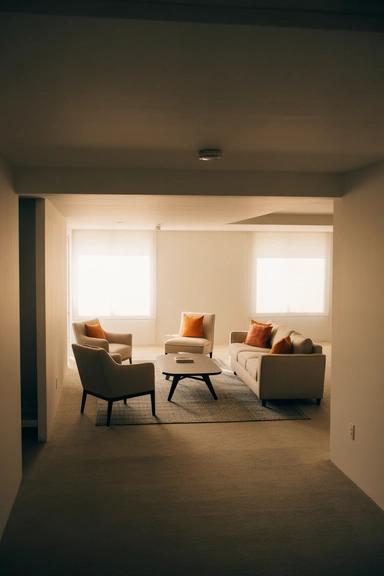
Furniture placement is a powerful yet underused element in rental-friendly living room decor ideas. Many renters push furniture against walls to avoid making marks, but this often results in awkward spacing and poor flow. Pulling seating slightly inward creates a more intentional layout and improves conversation zones. Area rugs and furniture grouping help define space without requiring physical changes to the room itself.
Thoughtful placement also compensates for architectural flaws common in rentals, such as off-center windows or narrow layouts. Floating furniture can redirect attention and improve balance, while leaving small gaps between walls and furniture prevents scuffing. Modular or lightweight pieces are easier to reposition and adapt as needs change. When furniture is arranged with purpose, the living room feels designed rather than improvised, even within strict lease limitations.
5. Correcting Window Proportions With Curtains and Temporary Hardware
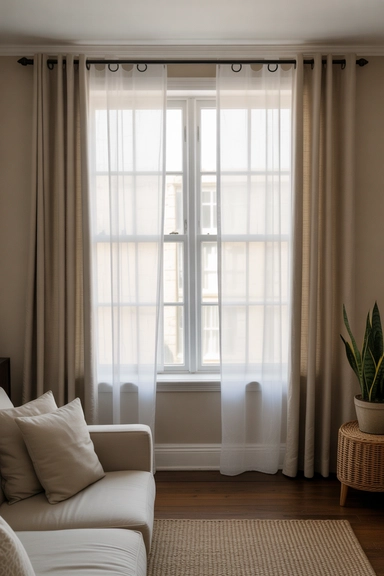
Curtains are rental-friendly living room decor ideas that dramatically affect how a room feels without permanent hardware. Tension rods, adhesive hooks, or existing curtain rails allow renters to add softness and vertical emphasis. Hanging curtains higher than the window frame visually raises the ceiling, which is especially useful in low-height rental apartments. The fabric choice influences both light control and mood, making curtains a functional design decision rather than a purely decorative one.
Neutral curtains in linen or cotton blends work well in rentals because they adapt to changing furniture and decor styles. Sheer panels maintain privacy while allowing natural light, while heavier fabrics improve insulation and sound absorption. Avoid overly bold patterns that dominate the room and feel tied to a single look. Properly hung curtains can make even standard rental windows feel intentional and well-proportioned.
6. Displaying Artwork in Ways That Avoid Drilling or Wall Damage
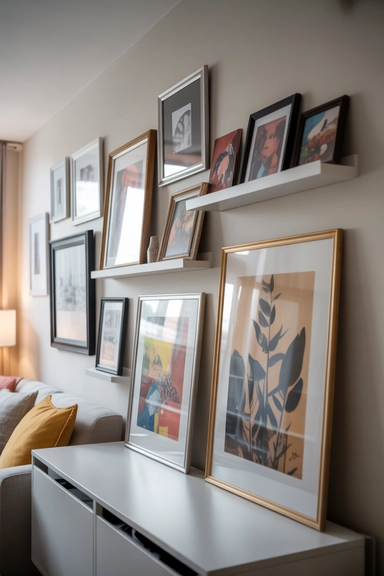
Artwork plays a major role in rental-friendly living room decor ideas when handled without wall damage. Adhesive hooks, picture ledges, and leaning frames allow renters to display art without drilling holes. The focus should be on scale and grouping rather than filling every empty wall. Larger pieces create impact with fewer attachments, while gallery-style arrangements should remain cohesive to avoid visual clutter.
Leaning artwork against walls or on consoles adds a relaxed, layered look that suits rental spaces well. This approach allows flexibility and reduces commitment, making it easy to change pieces over time. Choosing art with muted palettes or shared tones helps unify the room and keeps attention balanced. When art placement feels deliberate rather than temporary, it elevates the living room without breaking lease rules.
7. Softening Hard Rental Finishes With Plants and Natural Elements
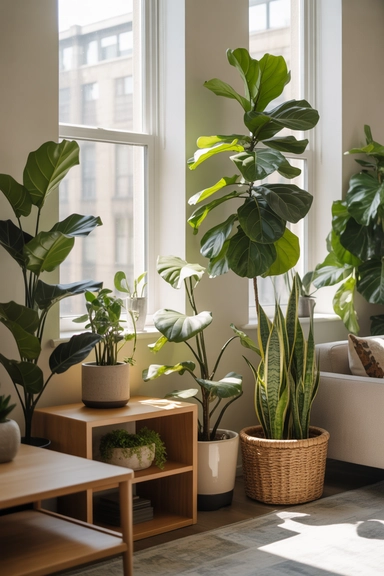
Plants are effective rental-friendly living room decor ideas because they introduce color, texture, and scale without altering surfaces. In rental spaces that feel rigid or boxy, greenery softens edges and breaks up hard lines created by walls and floors. Floor plants placed near windows add height and visual weight, while smaller plants on tables or shelves create layered interest. The advantage of plants lies in their flexibility; they can be moved easily and adapted to different layouts as the living room evolves.
Choosing the right plant matters more than quantity. Low-maintenance varieties prevent neglect and reduce visual clutter caused by dying foliage. Planters should be weighted and stable to avoid floor damage, especially in high-traffic areas. Neutral or textured pots work best in rentals because they blend with changing decor styles. When plants are placed intentionally, they act as living decor rather than temporary fillers.
8. Refreshing Old or Generic Furniture Using Slipcovers and Textiles
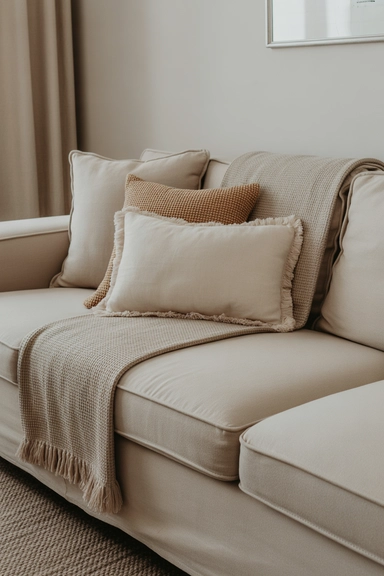
Slipcovers and textiles are rental-friendly living room decor ideas that allow furniture transformation without replacement. Many rental sofas and chairs are visually outdated or clash with personal style, yet replacing them is often impractical. Slipcovers offer a reversible solution, refreshing color and texture while protecting original upholstery. When fitted correctly, they look intentional rather than improvised, especially in neutral tones that complement the room’s overall palette.
Textiles extend beyond seating to include throws, cushions, and layered fabrics that add depth. Mixing textures such as cotton, wool, and linen prevents the space from feeling flat. Restraint is important; too many patterns can overwhelm a small rental living room. Thoughtfully chosen textiles make the room feel curated and comfortable while remaining easy to remove or update when lease terms change.
9. Using Storage Pieces That Hide Clutter and Act as Decor
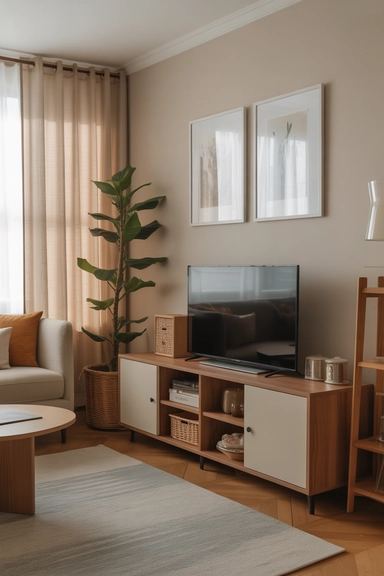
Storage-focused rental-friendly living room decor ideas address clutter without built-in solutions. Rentals often lack adequate storage, leading to crowded surfaces and visual noise. Freestanding shelves, storage benches, and closed cabinets provide organization while acting as decor elements. The key is choosing pieces that align with the scale of the room, avoiding bulky units that overpower limited square footage.
Closed storage is particularly valuable in rental living rooms because it hides everyday items without requiring wall installation. Low-profile cabinets can double as media units or consoles, while open shelving should be styled sparingly to avoid clutter. When storage serves both function and aesthetics, it reduces visual stress and creates a calmer environment. Thoughtful storage choices make rentals feel more livable without structural changes.
10. Creating a Neutral Foundation That Adapts to Future Moves
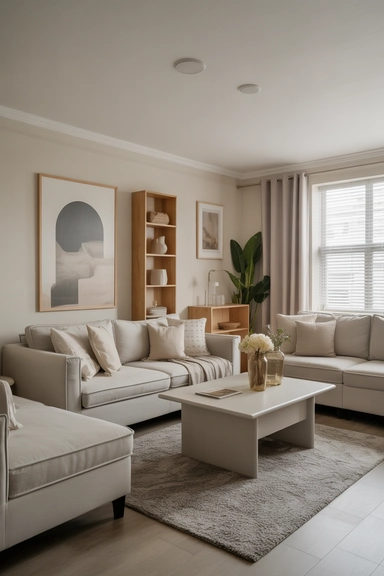
Neutral foundations are central to long-term rental-friendly living room decor ideas. Since renters often move, decor must adapt to new spaces with different layouts and lighting. Neutral furniture and base colors provide flexibility, allowing accent pieces to change without requiring a full redesign. This approach prevents the room from feeling dated or overly personalized in ways that are difficult to undo.
Neutral does not mean flat or boring. Variation in texture, material, and tone adds depth while maintaining cohesion. Layering soft neutrals with subtle contrast creates visual interest without overwhelming the space. This strategy allows renters to personalize gradually and replace small elements rather than entire pieces. A neutral foundation supports both current comfort and future transitions.
11. Expanding Light and Space With Strategically Placed Mirrors
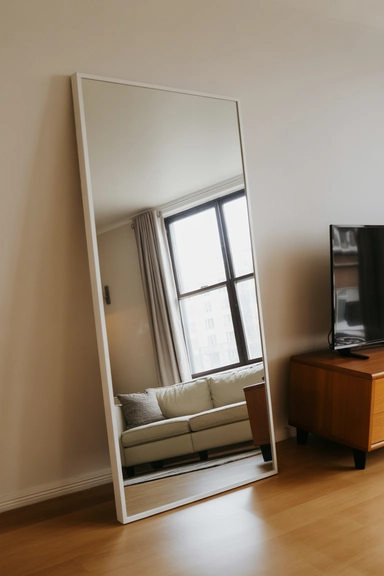
Mirrors are practical rental-friendly living room decor ideas that enhance light and spatial perception. In rentals with limited windows or awkward layouts, mirrors reflect natural light and visually expand the room. Leaning mirrors or those hung with adhesive hooks avoid drilling while still making a strong design statement. Placement is critical; mirrors should reflect something intentional, such as a window or a balanced vignette.
Oversized mirrors work particularly well because they create impact without requiring multiple attachments. Smaller mirrors should be grouped carefully to avoid cluttered reflections. Frames in simple finishes blend better with varied decor styles and future moves. When mirrors are used strategically, they solve common rental problems while contributing to a polished, finished look.
12. Separating Open Areas Using Temporary and Movable Dividers
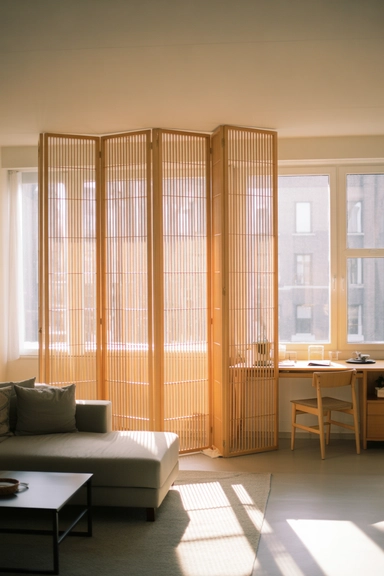
Temporary room dividers are rental-friendly living room decor ideas that improve functionality in open layouts. Many rentals combine living, dining, and working areas into one space, which can feel undefined. Folding screens, bookcases, or curtain dividers create separation without permanent installation. These solutions allow renters to control sightlines and establish distinct zones within the same room.
Dividers should feel light and intentional rather than blocking natural light completely. Open shelving or slatted designs maintain airflow and visual connection while still defining space. Choosing movable dividers ensures flexibility when layouts change or when moving out. This approach adds structure and purpose to rental living rooms without violating lease restrictions.
13. Knowing When to Stop Decorating to Avoid a Temporary Look
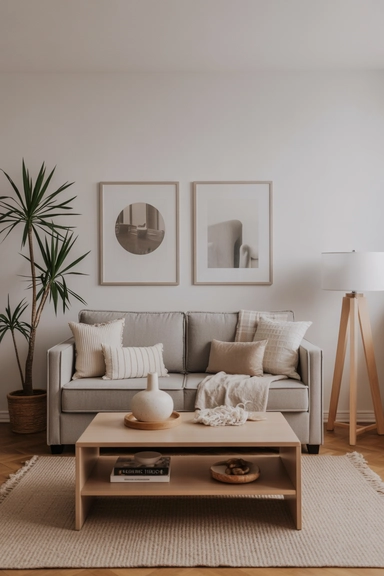
Restraint is a key principle in rental-friendly living room decor ideas, especially in smaller spaces. Over-decorating is a common mistake driven by the desire to personalize quickly. Too many accessories, patterns, or colors make the room feel temporary and crowded. A controlled approach focuses on fewer, well-chosen pieces that serve a purpose or create balance.
Leaving negative space is just as important as filling it. Clear surfaces and open areas allow the eye to rest and make the room feel larger. This discipline also simplifies moving, reducing packing and replacement costs. When decor choices are intentional rather than excessive, rental living rooms feel calm, stable, and thoughtfully designed.
14. Choosing Decor With Easy Removal in Mind From the Start
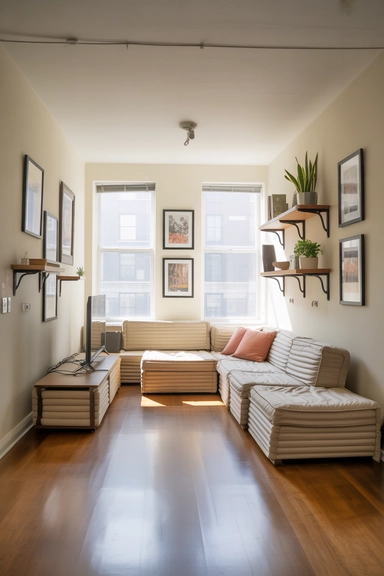
Planning for removal is essential in rental-friendly living room decor ideas. Every addition should be evaluated based on how easily it can be undone. Adhesives, finishes, and placements must be chosen with lease-end conditions in mind. This mindset prevents rushed fixes later and reduces stress when preparing to move out.
Decor that prioritizes reversibility often looks cleaner and more intentional. Lightweight furniture, removable accessories, and non-invasive installations encourage thoughtful design rather than impulse decisions. By considering the full lifecycle of decor choices, renters create spaces that feel finished while remaining practical. This approach balances comfort with responsibility, which is crucial in leased homes.
15.Replacing Built-Ins With Slim Console Tables and Freestanding Pieces
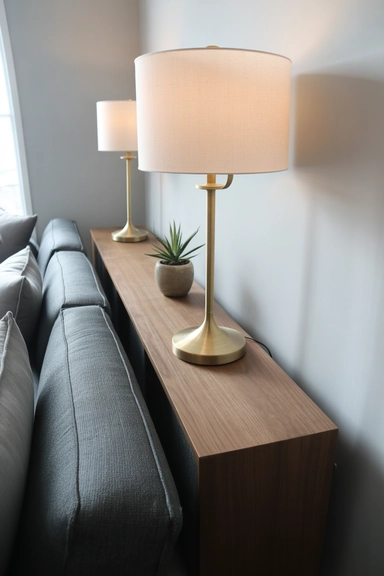
Console tables are practical rental-friendly living room decor ideas because they provide function without structural changes. Many rentals lack entry separation or wall-mounted storage, leaving awkward blank zones behind sofas or along narrow walls. A slim console fills these gaps while offering surface space for lighting, storage, or decor. When sized correctly, consoles add structure without obstructing movement or making the room feel crowded.
The advantage of consoles lies in flexibility. They can serve as media stands, entry drop zones, or display surfaces depending on layout needs. Closed or partially closed designs reduce visual clutter, while open bases keep the room feeling light. Since consoles require no installation, they move easily and adapt to future homes without modification.
16. Anchoring Seating Areas With Floor Lamps Instead of Ceiling Changes
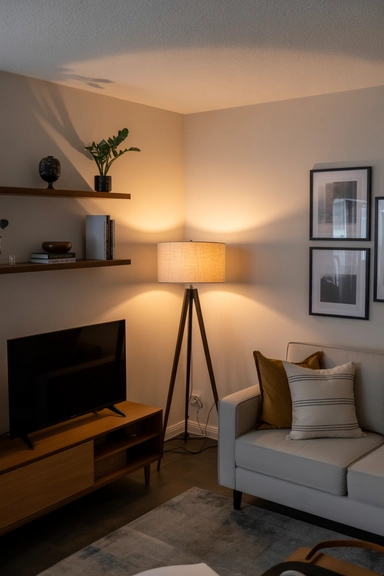
Floor lamps function as spatial anchors in rental-friendly living room decor ideas, replacing the need for ceiling modifications. Many rentals rely on central lighting that lacks warmth and direction. A well-placed floor lamp establishes a focal point and defines seating zones without touching wiring or walls. This creates intimacy in the living area and improves usability during evenings.
The style of the lamp should complement the scale of the room rather than dominate it. Slim bases work better in tight spaces, while arc or tripod designs add presence in larger rooms. Warm lighting enhances comfort and softens hard finishes commonly found in rentals. Floor lamps provide both form and function with zero lease risk.
17. Adding Vertical Storage Using Wall-Leaning Shelves
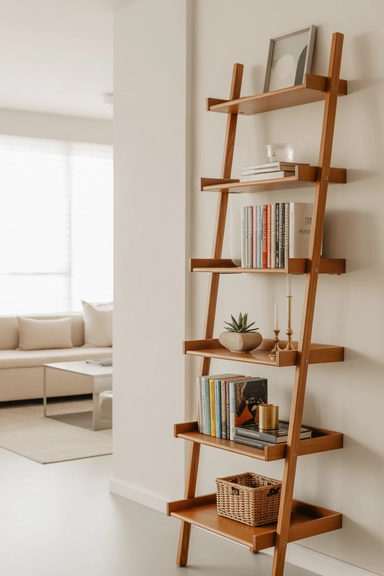
Leaning shelves are adaptable rental-friendly living room decor ideas that offer storage without drilling. Unlike wall-mounted units, they rest securely against walls and distribute weight through the floor. This makes them ideal for renters who need vertical storage but cannot install permanent fixtures. Leaning shelves also introduce height variation, which improves visual balance in flat or boxy rooms.
Styling restraint is essential to keep shelves from feeling cluttered. Combining a few decorative objects with practical items creates a lived-in but controlled look. Neutral shelving materials blend into various decor styles and remain useful after moving. Leaning shelves provide structure and function without violating lease agreements.
18. Balancing the Layout With Accent Chairs That Are Easy to Move
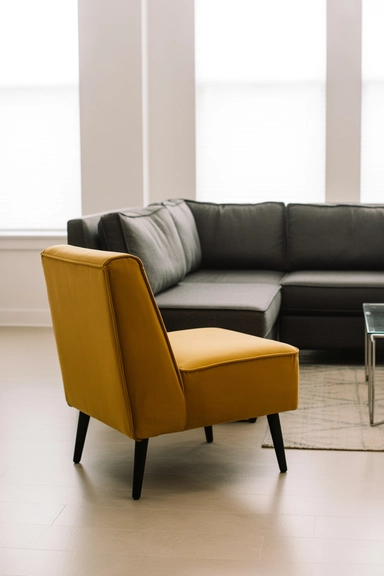
Accent chairs are effective rental-friendly living room decor ideas because they change layout dynamics without permanent alterations. Adding a chair can balance seating, improve conversation flow, and fill unused corners. Unlike large sofas, accent chairs are easy to reposition and adapt to different spaces. This flexibility is valuable in rentals where layouts often change between homes.
The key is choosing a chair that complements existing furniture rather than competing with it. Compact profiles work best in smaller living rooms, while texture and material add interest without overwhelming the space. Accent chairs introduce personality while remaining practical and movable, making them a smart investment for renters.
19. Layering Art on Surfaces Instead of Hanging It Permanently
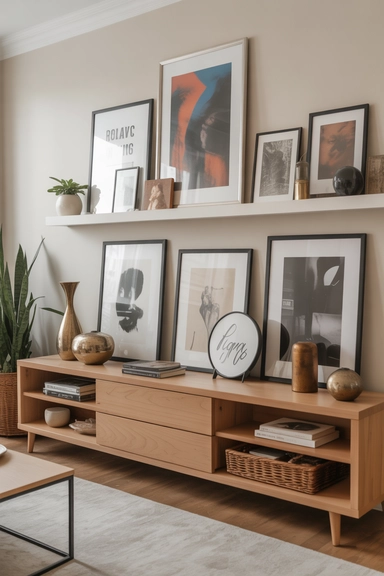
Layered wall art is a subtle approach within rental-friendly living room decor ideas that avoids heavy installation. Instead of hanging multiple framed pieces, layering art on shelves, consoles, or mantels creates depth without damage. This technique allows renters to display larger pieces with fewer attachment points or none at all.
Layering also allows easy updates over time. Art can be swapped or rearranged without leaving marks, which suits temporary living situations. Keeping color palettes cohesive prevents visual chaos and helps the room feel intentional. This method adds character while respecting lease limitations.
20. Prioritizing Layout Decisions Before Decorative Add-Ons
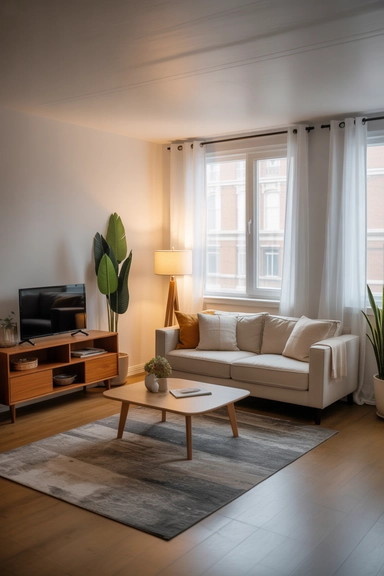
Layout-focused rental-friendly living room decor ideas often outperform decorative upgrades. Many renters invest in accessories without addressing poor furniture arrangement, resulting in cluttered or awkward spaces. Reworking layout improves flow, balance, and comfort without spending on new decor or risking wall damage.
Evaluating walkways, seating distance, and focal points creates clarity. Furniture should support how the room is actually used, not how it is supposed to look in photos. When layout decisions lead, decor naturally falls into place. This approach produces lasting improvement without violating lease rules.
21. Designing the Living Room Around Flexibility, Not Permanence
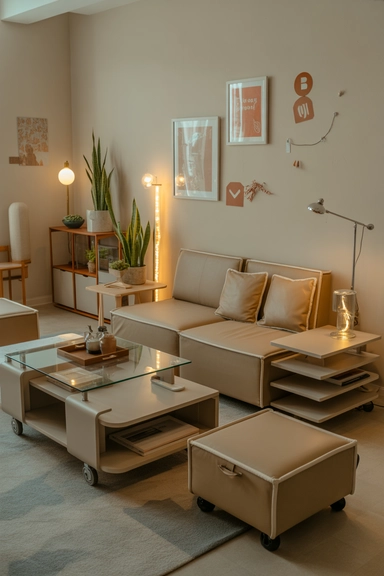
Long-term flexibility defines successful rental-friendly living room decor ideas. Every choice should consider future moves, different layouts, and changing needs. Furniture, lighting, and decor that adapt easily prevent repeated reinvestment. This mindset reduces waste and creates consistency across living spaces over time.
Flexible decor choices also reduce emotional attachment to temporary setups. Instead of forcing permanence, renters build a collection of adaptable elements that feel complete anywhere. This results in a living room that feels settled without being fixed. Thoughtful flexibility balances comfort, responsibility, and design quality.
Conclusion
Rental-friendly living room decor ideas succeed when they respect limitations rather than attempt to bypass them. By focusing on layout, lighting, movable elements, and reversible solutions, renters can create living rooms that feel intentional and complete. The most effective designs prioritize flexibility, restraint, and long-term usability over quick visual impact. When decor decisions are guided by real constraints and future transitions, rental spaces become comfortable, balanced environments that support daily living without risking lease agreements or deposits.