12 Japandi Living Room Ideas That Blend Minimalism and Warmth
Introduction
Japandi living rooms feel peaceful because they balance simplicity with warmth. Clean lines, natural materials, and uncluttered surfaces create calm, while soft textures and earthy tones prevent the space from feeling cold. The most successful Japandi Living Room Ideas focus on thoughtful restraint rather than empty minimalism. Every object has a purpose, every material feels intentional, and the room quietly supports daily life without demanding attention. When designed carefully, Japandi spaces invite slow living, mindful relaxation, and visual clarity that never feels sterile. For related inspiration, explore 16 Minimalist Living Room Ideas.
1- Choose a Neutral Base Palette
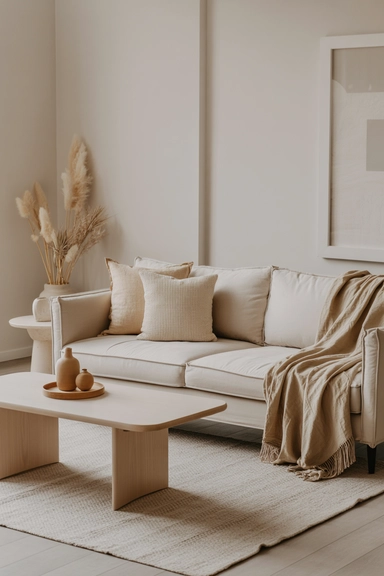
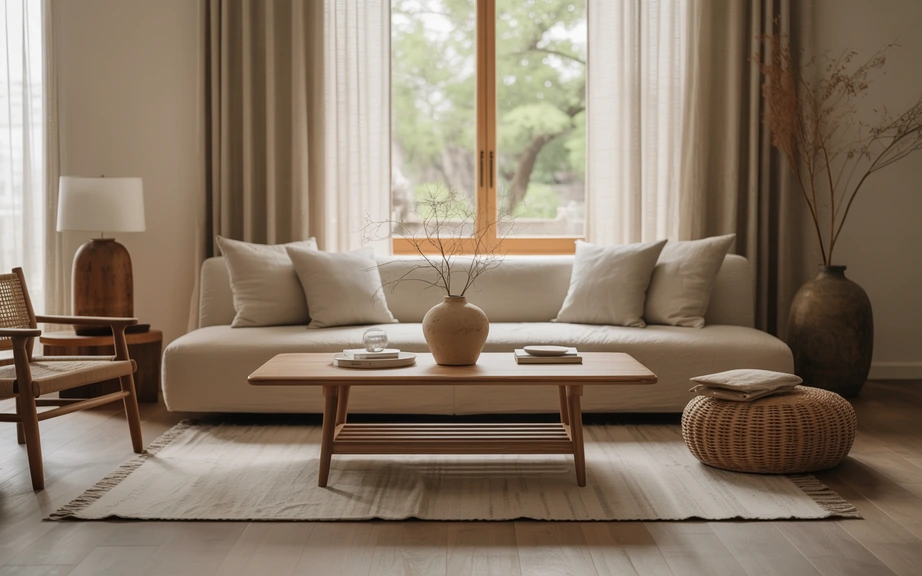
Japandi living rooms begin with a soft neutral foundation. Shades of warm white, sand, taupe, and soft grey create a gentle visual backdrop that feels open and breathable. This palette allows natural materials like wood, linen, and clay to stand out without competing for attention. Walls, large furniture pieces, and rugs should stay within this quiet color range to establish calm continuity throughout the space.
Once the base is set, subtle tonal variation keeps the room from appearing flat. A slightly darker sofa, textured cushions, or a warm wood coffee table introduce depth without disrupting harmony. These Japandi Living Room Ideas rely on understated color relationships, proving that simplicity becomes powerful when tones are layered with care and restraint.
2- Introduce Natural Wood Warmth
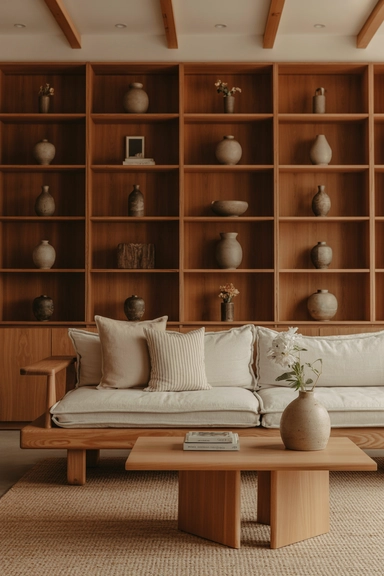
Wood is essential in Japandi interiors because it softens minimal design. Light oak, ash, or birch bring Scandinavian brightness, while darker walnut or teak introduce Japanese warmth. Used in coffee tables, shelving, or low seating frames, wood anchors the space with organic grounding that prevents starkness.
Consistency matters. Mixing too many wood tones creates visual noise, while staying within one or two finishes maintains cohesion. Pair wooden elements with matte ceramics or linen upholstery for balanced contrast. Among Japandi Living Room Ideas, natural wood is not decorative — it is structural to the feeling of quiet warmth and timeless comfort.
3- Keep Furniture Low and Grounded
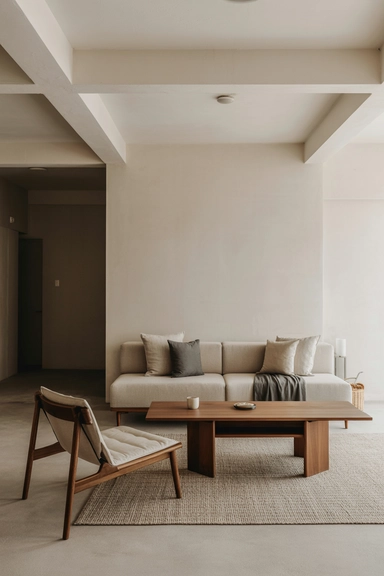
Japandi furniture sits close to the ground, encouraging relaxed posture and visual openness. Low sofas, slim coffee tables, and floor-adjacent seating create a grounded atmosphere that feels peaceful and uncluttered. This approach also keeps sightlines open, making even small living rooms feel spacious and breathable.
Simplicity in form is key. Furniture should have clean silhouettes without excessive ornamentation. Soft cushions and tactile upholstery ensure comfort without bulk. These Japandi Living Room Ideas emphasize how thoughtful furniture proportion shapes not only the look of the room but also how the space is experienced day to day.
4- Use Texture Instead of Pattern
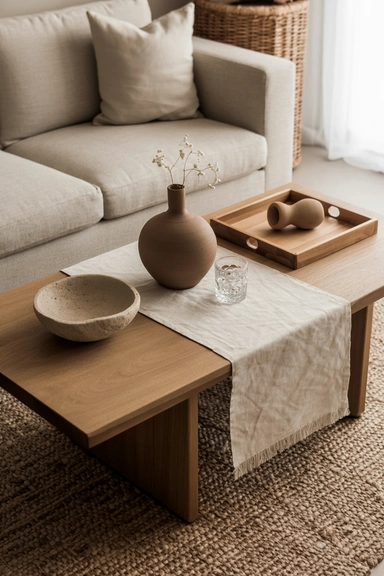
In Japandi design, texture replaces busy pattern. Woven rugs, linen cushions, clay vases, and raw wood surfaces introduce visual interest through touchable materials rather than printed motifs. This keeps the room calm while still preventing flatness.
Layering textures subtly builds depth. A soft throw on a structured sofa, a rough ceramic bowl on a smooth wooden table, or a paper lamp against a painted wall adds quiet richness. These Japandi Living Room Ideas show that when materials speak for themselves, the space feels serene, natural, and deeply considered.
5- Let Natural Light Shape the Space
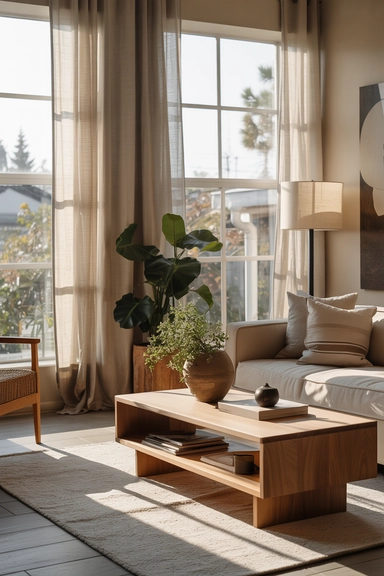
Japandi living rooms rely heavily on natural light to create softness and clarity. Large windows, sheer curtains, and open layouts allow daylight to flow freely, reducing the need for harsh artificial lighting. Light becomes a design element, highlighting textures, warming wood tones, and creating gentle shadow play across simple surfaces.
Window treatments should remain minimal. Linen sheers or light cotton panels filter brightness without blocking it. Avoid heavy drapes that interrupt the airy feeling. These Japandi Living Room Ideas treat sunlight as part of the decor, ensuring the room feels alive, balanced, and naturally inviting throughout the day.
6- Style with Handmade Ceramics
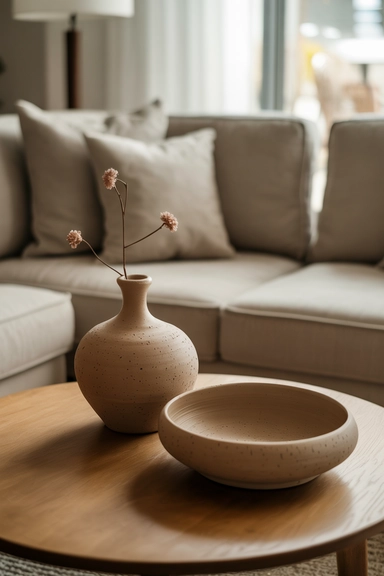
Handcrafted ceramics introduce warmth through imperfection. A clay vase, stoneware bowl, or hand-thrown cup adds quiet character that polished factory decor cannot replicate. These pieces feel human, grounding minimalist rooms with subtle irregularity and tactile beauty.
Placement should be thoughtful. One ceramic piece on a coffee table or shelf makes a stronger impact than a cluster of small items. For more styling inspiration that complements this aesthetic, explore 17 Wabi-Sabi Living Room Ideas to Embrace Imperfect Beauty. These Japandi Living Room Ideas show how handmade objects bring soul to minimal spaces without visual clutter.
7- Keep Decorative Objects Intentional
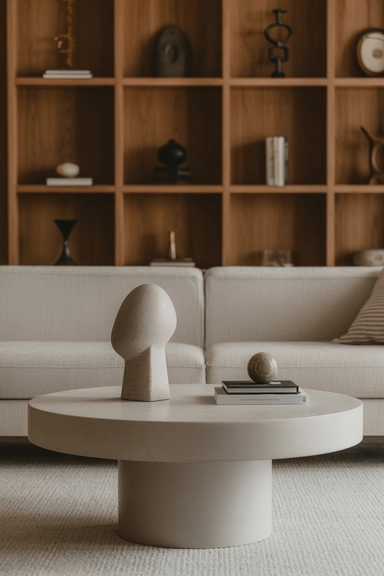
Japandi interiors avoid excess decor. Every object must serve a purpose, whether functional or emotional. A single sculptural piece, a meaningful book stack, or a small plant can speak louder than a crowded collection of accessories. This intentional approach allows each item to feel special rather than decorative filler.
Spacing is as important as selection. Leaving open surfaces creates breathing room that highlights chosen objects. Matte finishes and neutral tones maintain harmony. These Japandi Living Room Ideas prove that when decor is edited with care, the room feels calm, thoughtful, and quietly sophisticated.
8- Bring in Soft Greenery
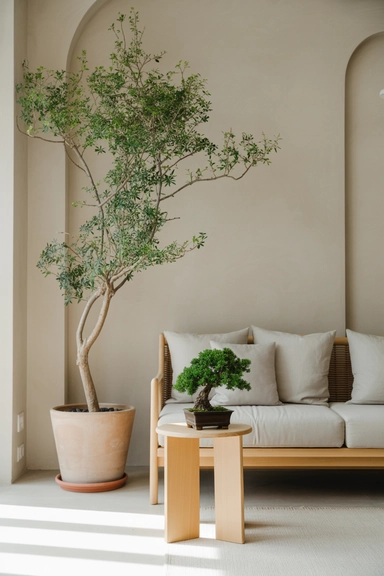
Plants add life without disrupting simplicity. In Japandi living rooms, greenery is used sparingly but purposefully. A tall floor plant in a clay pot or a small bonsai on a low table introduces organic freshness while respecting the minimalist aesthetic.
The key is restraint. Too many plants create visual noise, while a few well-placed ones enhance tranquility. Choose planters in natural materials like ceramic or stone for cohesion. These Japandi Living Room Ideas show how greenery becomes a living accent that softens minimal spaces naturally.
9- Choose Low-Profile, Simple Lighting
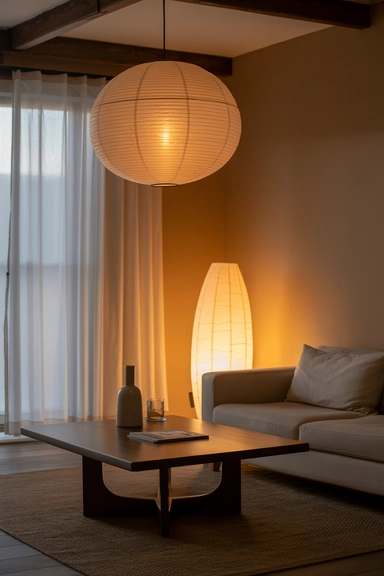
Lighting in Japandi living rooms is quiet and deliberate. Paper lanterns, fabric-shaded floor lamps, and small table lights create a soft glow that avoids harsh contrast. Fixtures remain visually light, allowing space and materials to take center stage rather than statement lighting dominating the room. This approach keeps evenings calm and restful instead of overly dramatic.
Layering light sources matters. One ceiling fixture is never enough. A corner lamp beside seating, a small lamp on a side table, and indirect light near shelves provide gentle balance. These Japandi Living Room Ideas rely on warm, diffused lighting to maintain serenity without sacrificing function or clarity.
10- Use Open Space as a Design Element
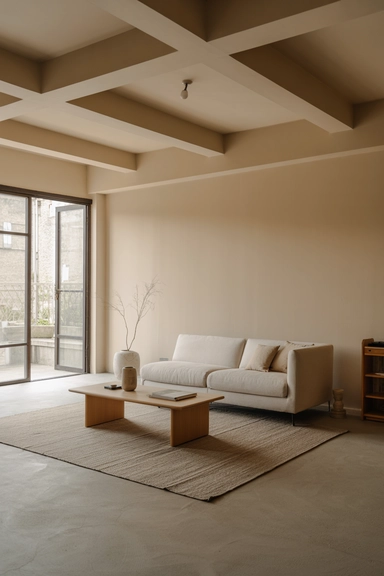
Empty space is not wasted space in Japandi interiors. Clear surfaces and open floor areas allow the eye to rest and the mind to feel calm. Instead of filling every corner, thoughtful spacing gives importance to the few pieces that remain. This visual breathing room is what separates Japandi from traditional minimalism that can feel cold.
Maintaining open space requires discipline. Storage solutions keep daily items out of sight so surfaces stay uncluttered. Furniture is arranged with intention, never overcrowding the room. These Japandi Living Room Ideas show that absence can be just as powerful as presence when shaping peaceful environments.
11- Blend Scandinavian Softness with Japanese Restraint
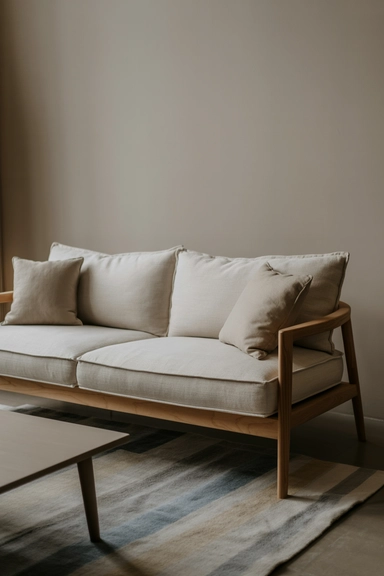
Japandi style succeeds because it balances two design philosophies. Scandinavian softness introduces comfort through textiles and warm wood tones, while Japanese restraint keeps forms clean and purposeful. Together, they create spaces that feel both welcoming and composed.
This balance appears in every choice. A soft linen sofa with a low, clean-lined frame. A wool rug paired with a simple wooden table. Subtle contrast between comfort and order keeps the room emotionally warm without visual excess. These Japandi Living Room Ideas demonstrate how merging influences creates timeless harmony rather than trend-based styling.
12- Edit Often and Keep Only What Matters
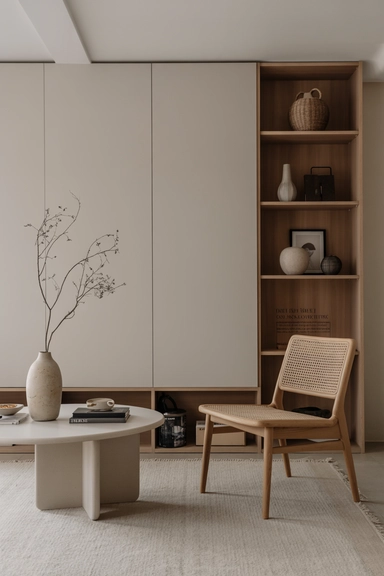
Japandi living rooms evolve through editing. Items that no longer serve function or meaning are removed, allowing the space to stay intentional. This ongoing refinement keeps rooms from accumulating clutter over time. The result is a home that always feels current, calm, and personally aligned.
Editing does not mean stripping away comfort. It means choosing quality over quantity. A favorite chair, a meaningful ceramic bowl, a beloved book stack — these remain. Everything else is reconsidered. These Japandi Living Room Ideas remind that simplicity is not a one-time decision, but a living practice.
Conclusion
Japandi living rooms feel timeless because they prioritize calm, warmth, and purpose. Through natural materials, soft light, intentional decor, and open space, the home becomes a place of quiet comfort rather than visual noise. These Japandi Living Room Ideas offer guidance, but the true beauty comes from adapting them to real daily life. When every object earns its place, the room supports relaxation, clarity, and a lasting sense of harmony.