18 Awkward Living Room Layout Ideas to Fix Unbalanced Spaces
Introduction
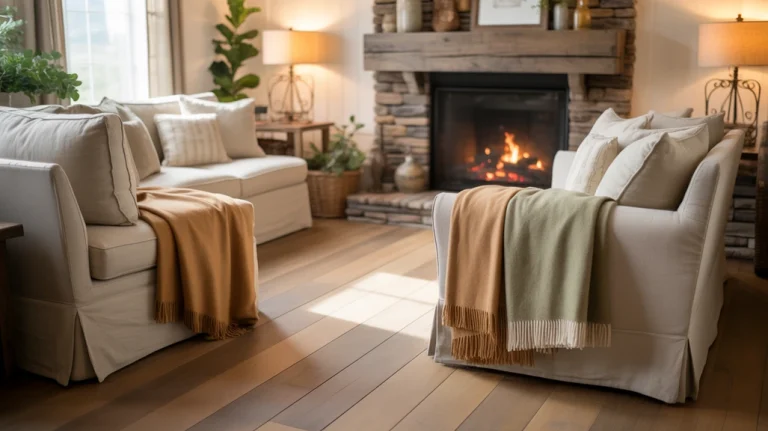
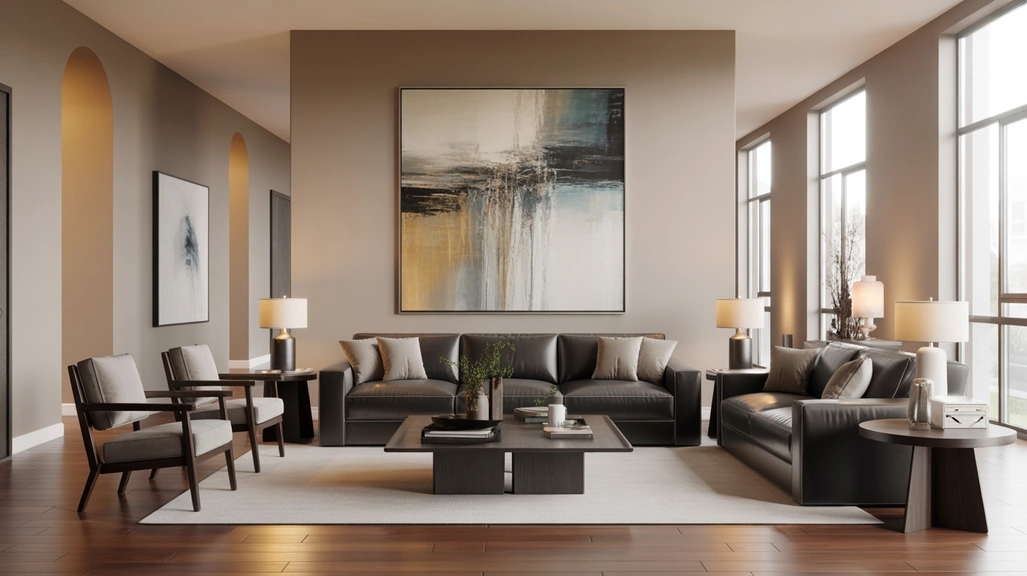
Awkward living room layout ideas focus on solving structural problems rather than decorating around them. These rooms often suffer from poor proportions, blocked circulation paths, off-center focal points, or competing architectural features that disrupt balance. The mistake many people make is adding furniture or decor before addressing how the room actually functions. Effective layout correction starts with understanding movement, sightlines, and usage patterns. When furniture placement responds to the room’s constraints instead of fighting them, even difficult spaces can feel intentional, usable, and visually stable—an approach that closely aligns with living room focal point ideas where layout clarity determines visual balance.
1. Fixing a Living Room With No Clear Focal Point

One of the most common awkward living room layout problems is the absence of a clear focal point. When no element anchors the room, furniture floats without purpose and seating feels disconnected. The solution is not always adding decor, but assigning visual priority. A focal point can be a window, a TV wall, a fireplace, or even a large piece of artwork. The key is choosing one element and committing to it fully.
Once the focal point is defined, seating should orient toward it, even if that requires breaking symmetry. Sofas and chairs do not need to sit against walls; they need to acknowledge the focal element. Supporting pieces like rugs and tables should reinforce this orientation. When the room has a visual anchor, the layout immediately feels intentional instead of scattered.
2. Dealing With Walkways Cutting Through the Seating Area
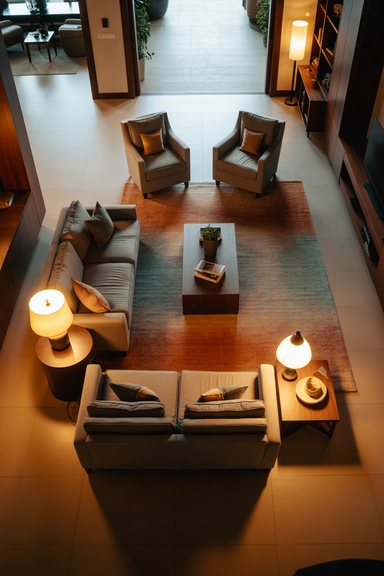
Many awkward living rooms suffer from circulation paths that run directly through seating zones, often connecting doors, hallways, or open-plan areas. This creates constant disruption and makes the room uncomfortable to use. The solution lies in redirecting movement rather than blocking it. Furniture placement should guide foot traffic around seating, not through it.
This can be achieved by pulling seating inward, using rugs to define zones, or positioning consoles and low furniture as subtle barriers. Chairs should never face main walkways directly. Clear paths must remain visible, but they should trace the perimeter of the room. When circulation flows around seating instead of bisecting it, the room becomes calmer and more functional.
3. Correcting a Long, Narrow Living Room Layout
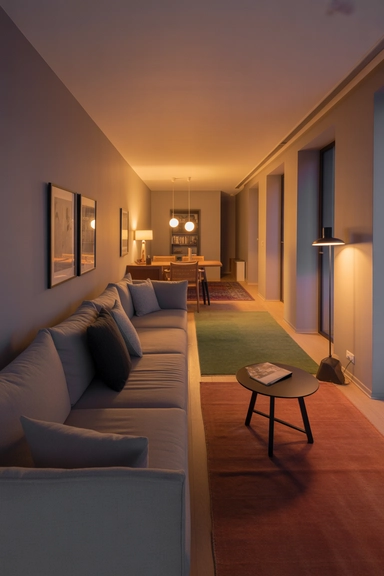
Long, narrow living rooms often feel like corridors rather than gathering spaces. The mistake is lining all furniture along the longest walls, which exaggerates the room’s proportions. To correct this, the layout must break the length visually and functionally. Furniture should be grouped into zones rather than stretched across the room.
Floating a sofa perpendicular to the long wall or creating two smaller seating areas helps redistribute weight. Rugs can be used to define these zones clearly. Lighting and side tables should support each grouping independently. By treating the room as multiple functional areas instead of one long space, the layout feels balanced and intentional.
4. Managing Multiple Doorways That Disrupt Furniture Placement
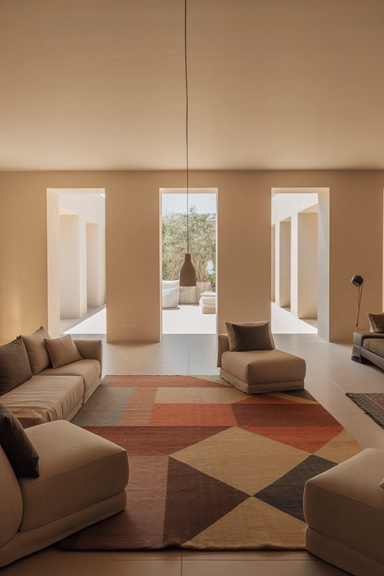
Awkward living room layouts often result from too many doorways competing for wall space. When doors interrupt every surface, furniture placement becomes reactive instead of intentional. The solution is to stop treating walls as the primary organizing tool. Instead, the layout should be centered around a functional core created by furniture grouping. Seating can float away from walls to form a contained zone that ignores door interruptions.
A rug becomes essential in this scenario. It defines the seating area independently of walls and doorways. Low-profile furniture maintains sightlines, while consoles or benches can visually block door clutter without restricting access. When furniture establishes its own boundaries, the room regains structure despite architectural interruptions.
5. Solving an Off-Center Fireplace or TV Placement
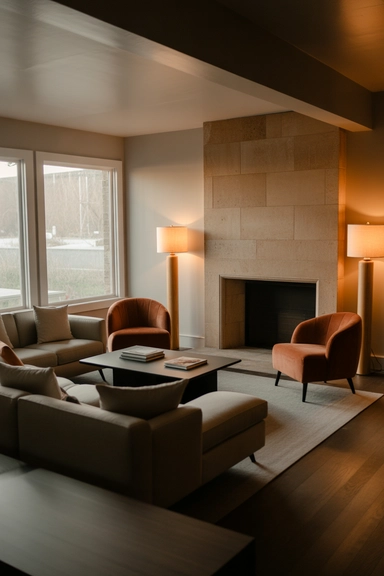
An off-center fireplace or television creates visual imbalance that often leads to awkward furniture alignment. Forcing symmetry around a misaligned focal point exaggerates the problem. Instead, the layout should acknowledge the offset and rebalance visually through furniture scale and spacing rather than alignment.
This can be achieved by centering the seating area on the room rather than the focal point and allowing the focal element to sit slightly off-axis. Accent chairs, lighting, or shelving can counterbalance the offset visually. When balance is achieved through distribution rather than alignment, the room feels intentional instead of flawed.
6. Fixing a Living Room That Feels Too Small for Its Furniture
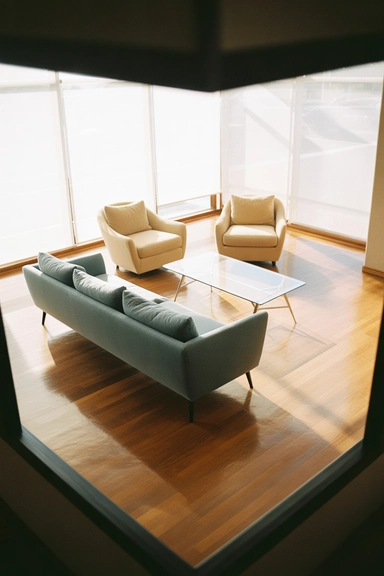
Many awkward living rooms feel cramped not because of size, but because furniture scale is mismatched. Oversized sofas, bulky chairs, or deep tables consume circulation space and restrict movement. The fix begins by reassessing what the room actually needs rather than what was purchased.
Reducing the number of large pieces often matters more than replacing them. Removing one oversized chair or swapping a large coffee table for a slimmer option can restore flow. Furniture should allow clear walking paths and visual breathing room. When scale matches function, even small rooms regain balance and comfort.
7. Handling a Living Room With Windows on Every Wall
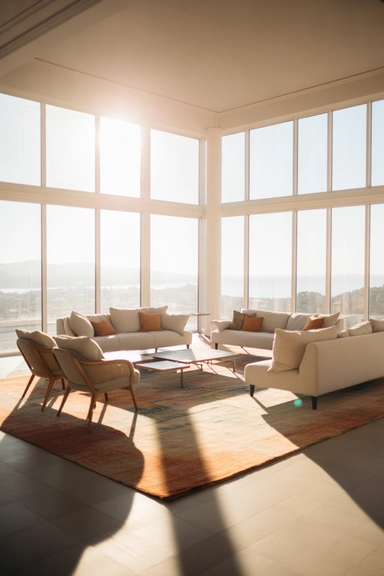
Living rooms with windows on multiple walls often feel impossible to furnish because usable wall space is limited. The mistake is trying to preserve every window visually instead of prioritizing function. Furniture does not need to avoid windows entirely. Low-backed sofas or benches can sit in front of windows without blocking light or views.
The layout should identify which windows matter most for light and circulation. Secondary windows can support furniture placement if heights are respected. Using floating furniture and rugs to define the seating zone allows the room to function without relying on walls. When windows are treated as light sources rather than obstacles, the layout becomes flexible and balanced.
8. Fixing a Living Room That Opens Directly Into Another Space
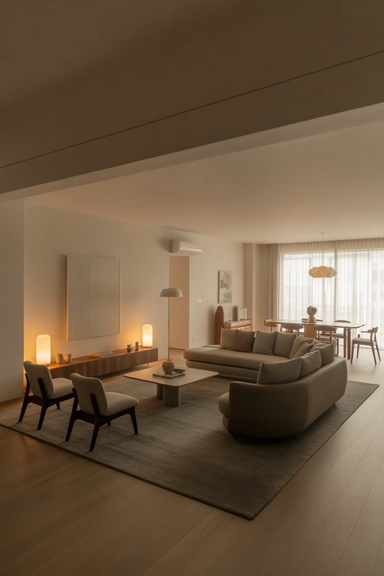
Open connections to dining areas, kitchens, or entryways often create awkward living room layouts because boundaries are unclear. The room feels unfinished when furniture floats without definition. The solution is to establish visual separation without physical barriers. Rugs, lighting, and furniture orientation should define the living room zone clearly.
Seating should face inward toward a focal area, not outward toward traffic zones. Consoles or low shelving can mark edges subtly. Lighting specific to the living area reinforces its identity. When zones are clearly defined through layout rather than walls, open-plan spaces feel organized instead of scattered.
9. Correcting a Living Room With an Unusable Corner
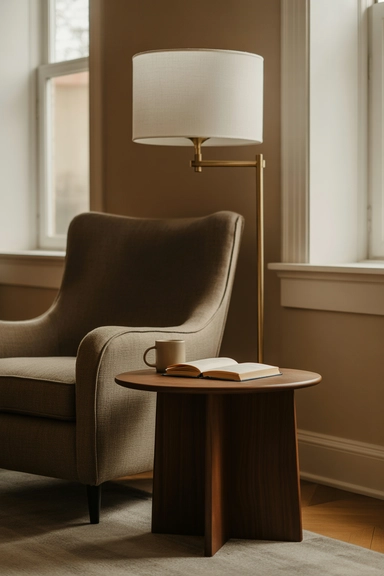
Unusable corners often result from awkward angles, poor lighting, or leftover space after main furniture placement. Leaving these corners empty can make the room feel incomplete, but filling them randomly adds clutter. The fix is to assign a specific function that fits the space’s limitations.
A reading chair, floor lamp, or vertical storage can activate the corner without competing with the main layout. The scale should remain modest so the corner supports rather than distracts. When every area has a purpose, the room feels resolved instead of patched together.
10. Fixing a Living Room With Too Many Competing Focal Points
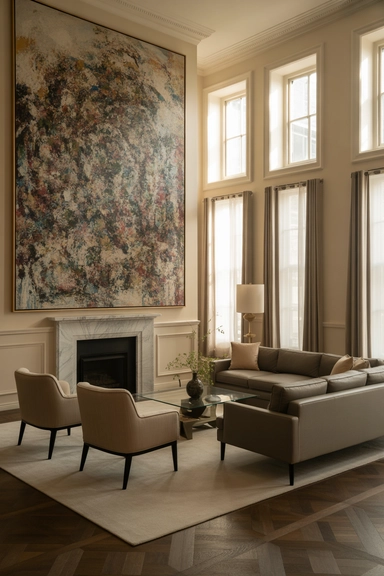
Awkward living room layouts often occur when multiple focal points compete for attention, such as a fireplace, television, large window, or architectural feature. When furniture attempts to address all of them equally, the result is visual confusion and fragmented seating. The correction begins by choosing a primary focal point based on daily use rather than aesthetics. This decision establishes hierarchy and gives the layout direction.
Once the primary focal point is selected, secondary elements must become supportive rather than dominant. Seating should orient toward the main focal point, while other features are acknowledged through peripheral placement or lighting. Rugs and tables should reinforce this hierarchy. When visual priorities are clarified, the room regains coherence and usability.
11. Solving a Living Room With Uneven Ceiling Heights
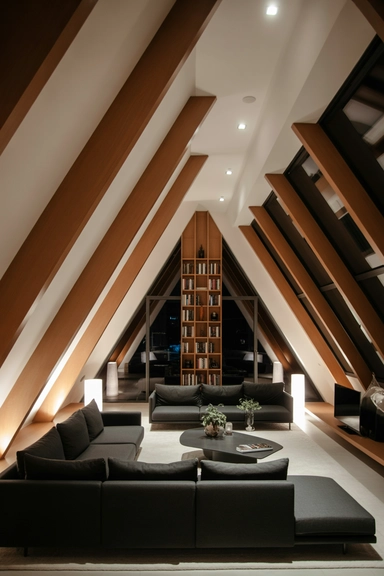
Uneven or sloped ceilings often make living rooms feel visually unstable, especially when furniture placement ignores vertical proportions. The common mistake is trying to mirror furniture height on both sides of the room, which exaggerates imbalance. Instead, the layout should respond asymmetrically, using furniture scale and placement to restore visual equilibrium.
Lower-profile seating works better under sloped sections, while taller elements can be positioned where ceiling height allows. Vertical lighting and artwork should follow ceiling lines rather than fight them. When furniture responds to vertical constraints, the room feels intentional instead of architecturally compromised.
12. Dealing With a Living Room That Feels Too Wide and Empty
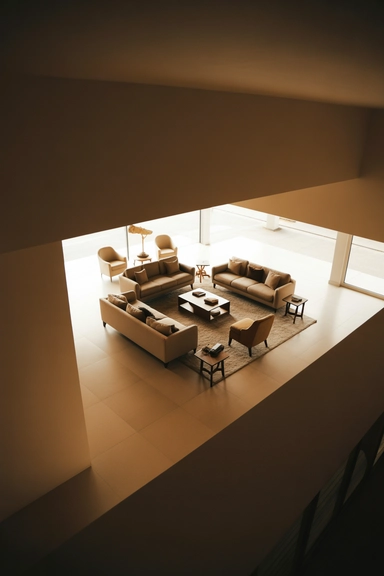
Overly wide living rooms often feel awkward because furniture clings to walls, leaving a large unused center. This layout disconnects seating and reduces intimacy. The solution is to pull furniture inward and create one or more central zones that encourage interaction. Floating sofas and chairs help reclaim the middle of the room.
Rugs play a critical role by anchoring seating groups and defining boundaries. Side tables and lighting should support these zones independently. When width is managed through grouping rather than wall alignment, the room feels balanced, functional, and socially inviting.
13. Correcting a Living Room With an Entry Door Inside the Seating Area
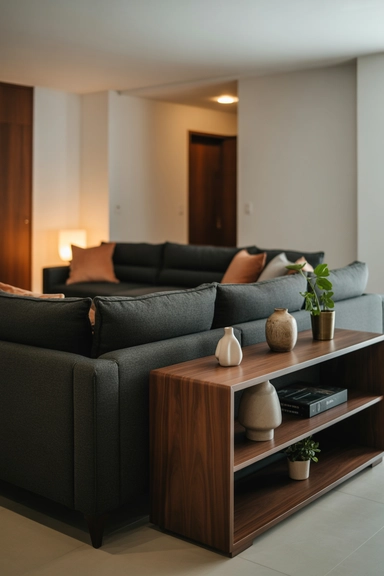
Living rooms where the main entry door opens directly into the seating area often feel exposed and unsettled. The problem is not the door itself, but the lack of spatial transition. When seating faces or crowds the entry, comfort drops and circulation interrupts use. The solution is to establish a soft boundary that redirects movement without blocking access.
This can be done by floating a sofa with its back toward the entry, adding a narrow console behind it, or using a rug to define where the living zone begins. Lighting placed within the seating area reinforces separation. When entry and seating are visually distinguished, the room feels calmer and more intentional.
14. Fixing a Living Room With Columns or Structural Posts
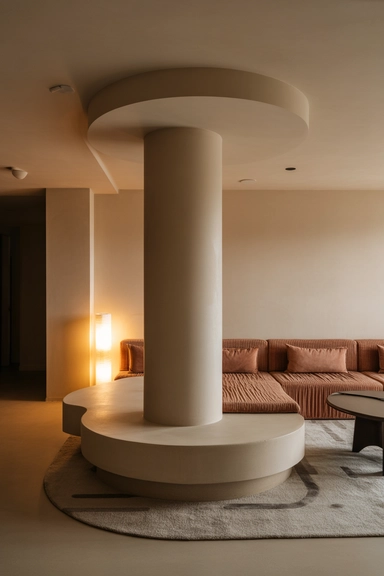
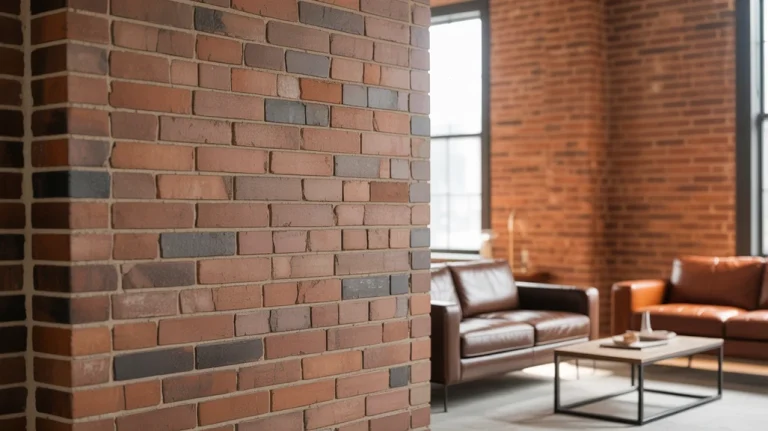
Structural columns placed within living rooms often create awkward dead zones and disrupt furniture alignment. Ignoring them usually worsens the problem. Instead, the layout should incorporate columns as part of the spatial logic. Furniture can be arranged to align with the column, using it as a divider or anchor rather than an obstacle.
Placing seating on either side of a column or positioning a table or shelf adjacent to it helps integrate the structure. Rugs can unify areas split by posts. When columns are treated as organizing elements, the room regains balance and avoids feeling fragmented.
15. Managing a Living Room That Must Serve Multiple Functions
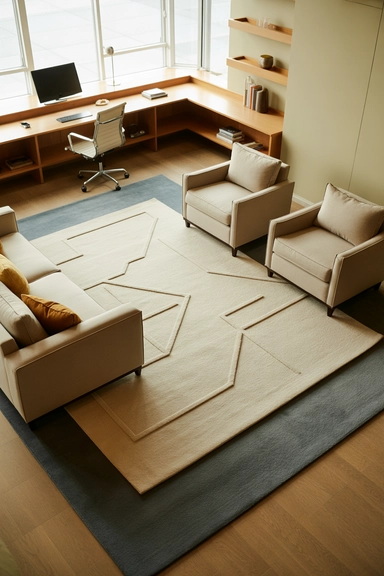
Living rooms that double as workspaces, play areas, or media zones often feel awkward because functions overlap without clarity. The fix is not adding more furniture, but defining zones through layout. Each function needs a clear physical boundary, even within a shared space.
Rugs, lighting, and furniture orientation should distinguish zones without walls. Seating should remain focused on social use, while secondary functions stay peripheral. When each activity has a defined place, the room feels purposeful rather than compromised by competing demands.
16. Fixing a Living Room Where Furniture Blocks Natural Light
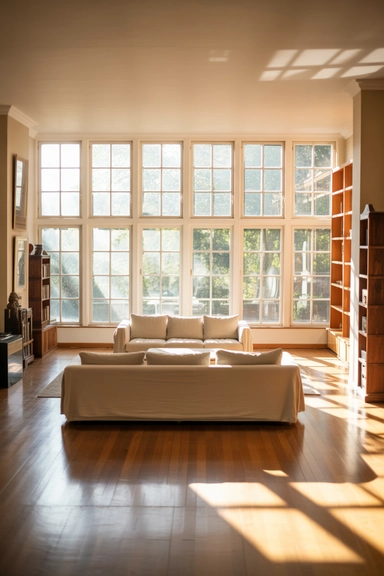
Awkward living room layouts often result from furniture blocking windows or light paths, making the space feel smaller and unbalanced. The mistake is placing tall or bulky pieces directly in front of windows for the sake of wall alignment. Light should be treated as a structural asset. Furniture placement must allow daylight to travel across the room, supporting both visibility and comfort.
Lower-profile seating, armless chairs, or benches can sit near windows without blocking light. Tall storage should be moved to interior walls. When light flow is prioritized in layout decisions, the room immediately feels more open, balanced, and usable throughout the day.
17. Correcting a Living Room With Uneven Wall Lengths
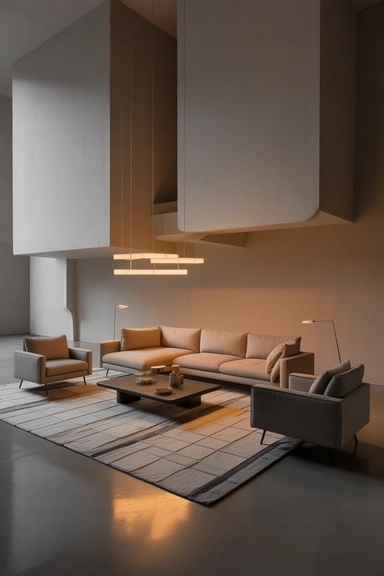
Uneven wall lengths create awkward layouts when furniture is forced to align symmetrically. Attempting to center everything along mismatched walls exaggerates imbalance. Instead, the layout should be organized around functional groupings rather than wall dimensions. Seating should relate to each other first, not to the walls.
Floating furniture allows the room to establish its own geometry independent of wall length. Rugs define seating zones, while side tables and lighting complete the grouping. When furniture forms a cohesive unit, uneven walls fade into the background and the room feels intentional.
18. Fixing a Living Room That Feels Disconnected From Itself
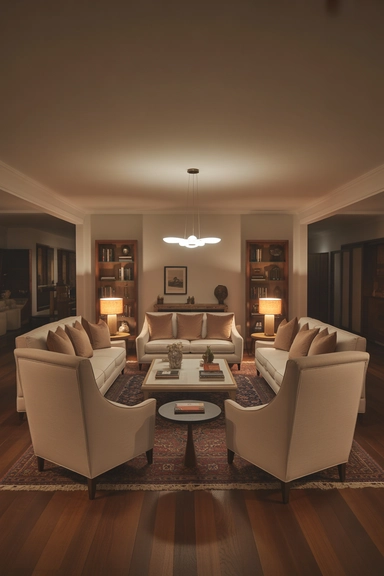
Some living rooms feel awkward because elements do not relate spatially—furniture faces different directions, zones lack definition, and no clear center exists. This disconnection usually stems from incremental additions rather than planned layout. The solution is to reset the room by identifying a central organizing element.
This may be a seating group, rug, or focal feature that everything else responds to. Furniture should face inward, lighting should support the core zone, and peripheral pieces should reinforce the layout. When the room regains a central structure, it feels unified and resolved.
Conclusion
Awkward living room layout ideas succeed when problems are addressed structurally rather than decoratively. Poor balance, disrupted circulation, and competing architectural features cannot be solved with accessories alone. Effective layouts prioritize movement, sightlines, scale, and usage patterns before appearance. By treating furniture placement as a planning tool instead of a reaction, unbalanced rooms can be transformed into functional, visually stable spaces. When layout decisions respect the room’s constraints, even the most challenging living rooms become comfortable, intentional, and easy to use over time.