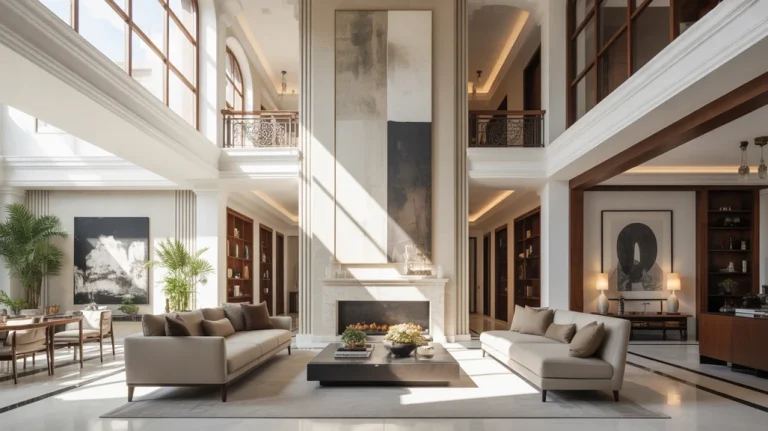

25 Cottage Living Room Decor Ideas for Soft, Lived-In Comfort
Introduction
Cottage living room decor ideas focus on comfort, practicality, and a sense of familiarity built over time rather than visual perfection. This style draws from traditional homes where materials age naturally, furniture is chosen for use rather than display, and rooms evolve through everyday living. Wood, soft textiles, and muted colors form the foundation, but layout and proportion matter just as much as decor. A well-designed cottage living room feels calm without feeling staged, layered without clutter, and personal without excess, closely aligning with traditional living room decor ideas that prioritize balance, structure, and long-term livability.
1. Soft Neutral Palettes That Support Everyday Living
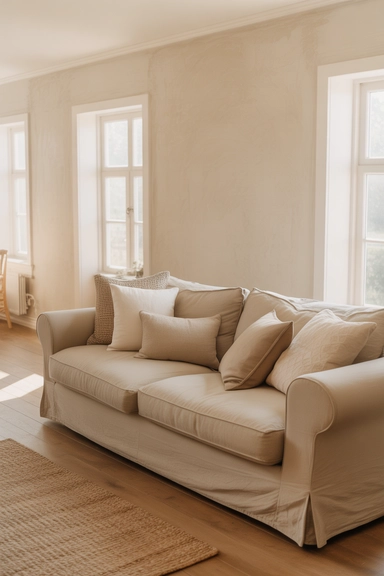
Color choices in cottage living room decor ideas tend to be restrained and practical. Soft whites, warm creams, pale beige, and muted greige create a backdrop that works with natural light and varied furnishings. These tones allow furniture, textiles, and wood finishes to coexist without visual tension.
Rather than relying on contrast, cottage interiors benefit from tonal variation. Slight shifts in shade across walls, upholstery, and rugs add depth while keeping the room cohesive. Avoid crisp or cool neutrals that feel formal. When the palette stays warm and understated, the space remains flexible and easy to live with over time.
2. Comfortable Seating With Relaxed Proportions
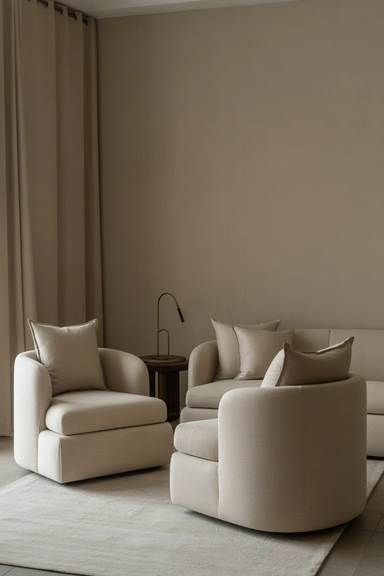
Seating is central to cottage living room decor ideas because comfort is never secondary. Sofas and chairs should feel generous in scale, with cushions that invite use rather than hold sharp lines. Slipcovered or softly upholstered seating supports both comfort and practicality.
Furniture proportions matter more than style labels. Seating should align with the room’s size, allowing movement without crowding. Overly structured or decorative frames can feel out of place. When seating is chosen for comfort first and appearance second, the living room naturally feels welcoming and functional.
3. Cottage Living Room Decor Ideas Using Natural Wood

Natural wood anchors many cottage living room decor ideas, providing structure and warmth. Coffee tables, side tables, shelving, and beams often feature visible grain and simple construction. Finishes tend to be matte or lightly worn rather than polished.
Consistency helps maintain balance. Mixing several wood tones can work if they share similar warmth. Avoid overly dark or glossy finishes that introduce formality. When wood appears throughout the room in a restrained, repeatable way, it grounds the space and reinforces its lived-in character.
4. Layered Textiles That Add Practical Warmth
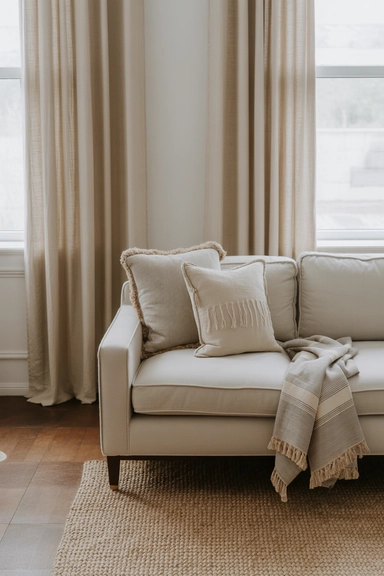
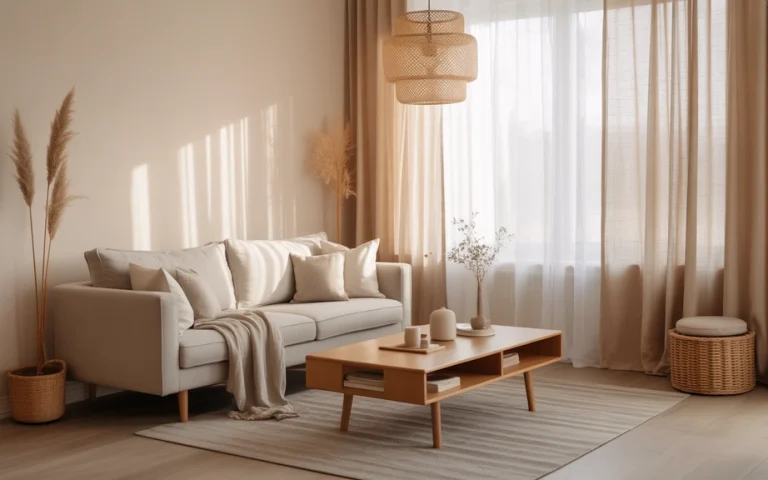
Textiles play a functional role in cottage living room decor ideas, not just a decorative one. Rugs define seating areas, curtains soften light, and cushions provide everyday comfort. Materials such as cotton, linen, and wool work well because they wear naturally.
Layering should feel intentional rather than styled. A rug under seating, cushions on sofas, and a throw within reach are usually enough. Avoid excessive pattern mixing or heavy fabrics that limit flexibility. When textiles are layered with purpose, they support comfort without creating visual clutter.
5. Simple Storage That Keeps the Room Usable
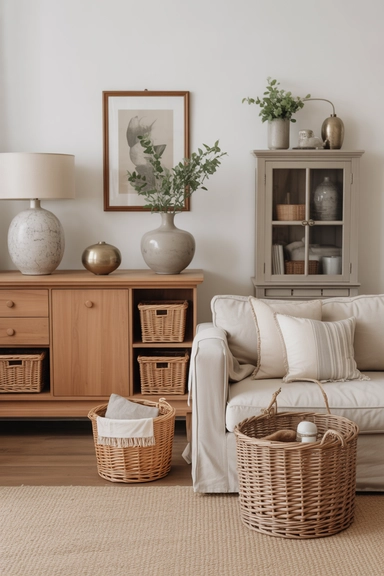
Cottage living room decor ideas often include storage that supports daily life. Cabinets, baskets, open shelving, and sideboards help manage books, blankets, and everyday items. Storage should feel integrated into the room rather than added later.
Closed storage keeps surfaces clear, while limited open shelving works best when lightly styled. Materials should match the room’s overall tone, favoring wood or painted finishes. When storage solutions are practical and understated, the living room remains calm, organized, and easy to use.
6. Lighting That Prioritizes Function Over Drama
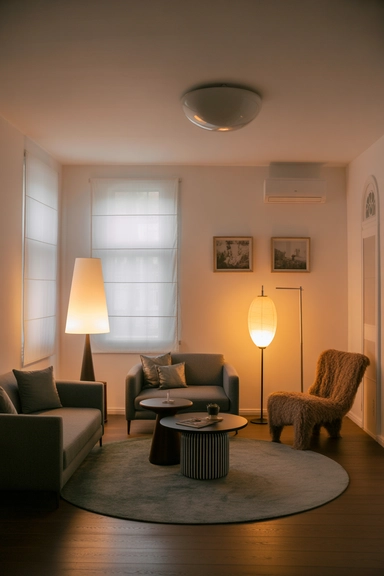
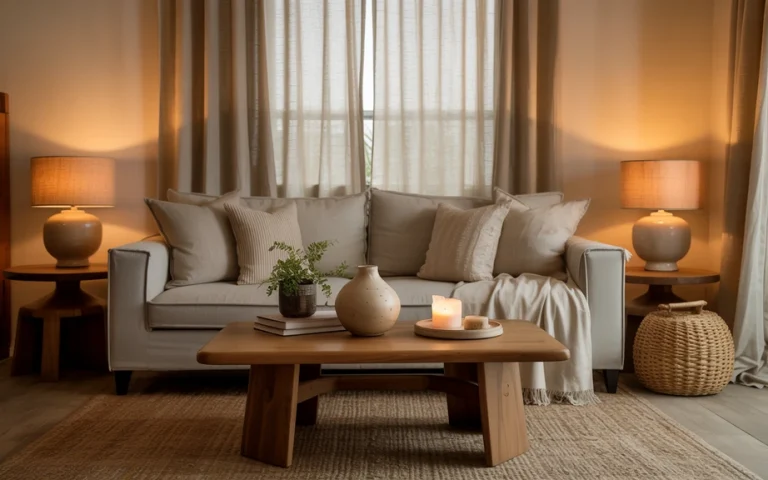
Lighting in cottage living room decor ideas is chosen for usability rather than statement. Table lamps, floor lamps, and simple ceiling fixtures provide even illumination where it’s needed. Warm bulbs help maintain consistency with natural materials and soft colors.
Multiple light sources prevent harsh shadows and support different activities throughout the day. Decorative lighting should never overpower the room. When lighting is layered and functional, it enhances comfort and reinforces the cottage living room’s everyday purpose.
7. Cottage Living Room Decor Ideas With Vintage and Collected Pieces

Cottage living room decor ideas often rely on furniture and decor that appear collected over time rather than purchased as a set. Vintage armchairs, old trunks, side tables, or inherited cabinets introduce variation in scale and finish that newer pieces rarely provide. These items give the room visual history without requiring decorative styling.
Placement matters more than quantity. One or two older pieces integrated into the layout are enough to add depth. Pair them with simpler furnishings to avoid visual heaviness. When vintage elements are used selectively, they strengthen authenticity while keeping the room practical and balanced.
8. Layouts That Encourage Everyday Use
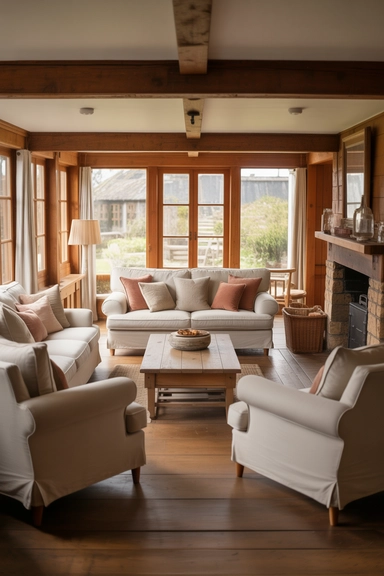
Layout is critical in cottage living room decor ideas because these spaces are meant to be used daily. Seating should be arranged to support conversation, reading, or quiet activities without blocking circulation. Furniture placement should feel natural rather than symmetrical for appearance alone.
Clear walkways prevent the room from feeling crowded, especially in smaller cottages. Avoid pushing all furniture against walls; instead, create functional groupings. When the layout prioritizes how people move and sit, the living room remains comfortable and adaptable over time.
9. Area Rugs That Define Space Without Overpowering
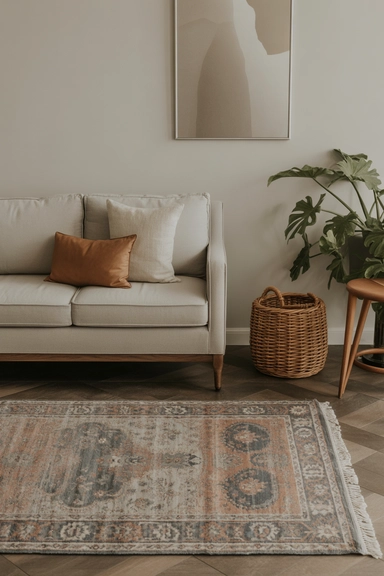
Rugs serve a practical role in cottage living room decor ideas by grounding furniture and improving comfort underfoot. Rugs should be large enough to sit beneath seating rather than floating awkwardly in the center of the room. Materials such as wool or cotton blends work well for durability.
Patterns should be subtle and familiar, avoiding bold or high-contrast designs. Color tones should relate closely to the room’s palette. When rugs are chosen for scale and function first, they quietly support the room without becoming visual distractions.
10. Open Shelving Used With Restraint
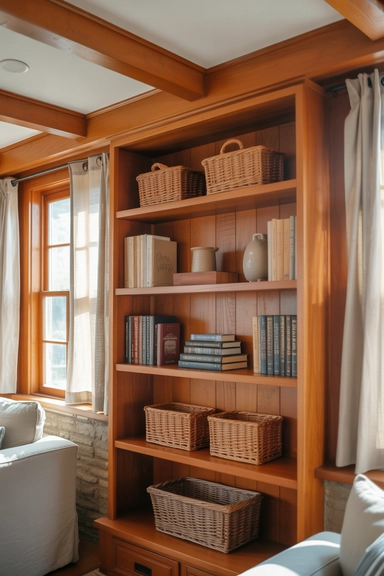
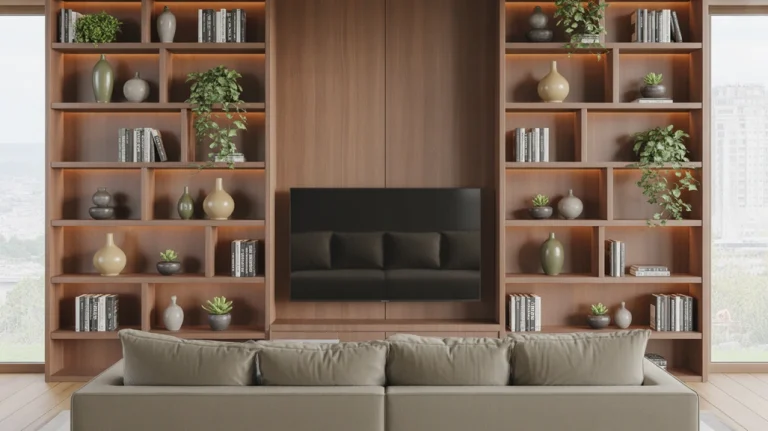
Open shelving appears frequently in cottage living room decor ideas, but it works best when used sparingly. Shelves are useful for books, baskets, or a few functional objects, but overloading them creates visual noise. Spacing between items is essential.
Shelving materials should match other wood finishes in the room to maintain consistency. Avoid decorative styling that turns shelves into display areas. When open shelving remains functional and lightly arranged, it supports storage without disrupting the room’s calm structure.
11. Subtle Color Accents That Feel Familiar
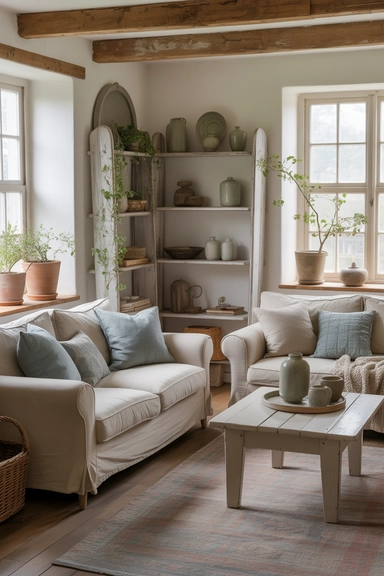
While cottage living room decor ideas favor neutral foundations, subtle color accents help prevent the space from feeling flat. Muted blues, soft greens, pale terracotta, or dusty florals work well when introduced through cushions, ceramics, or artwork.
Color should repeat quietly across the room rather than appear once. Avoid strong contrasts or modern color blocking. When accents feel familiar and understated, they add depth while preserving the room’s relaxed, lived-in quality.
12. Curtains and Window Treatments That Let Light Work
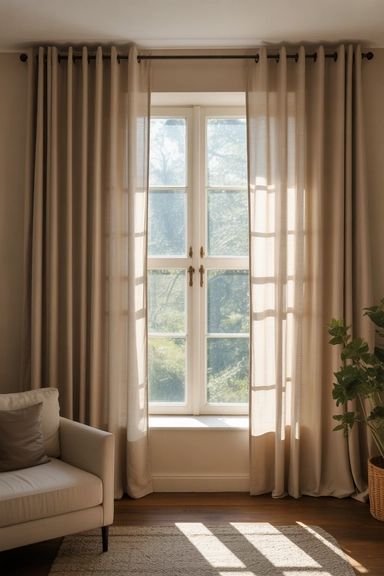
Window treatments in cottage living room decor ideas should support natural light rather than control it aggressively. Lightweight curtains, relaxed panels, or simple shades allow daylight to move freely through the room. Fabric texture matters more than pattern.
Curtains should be mounted high enough to avoid cutting off the window visually. Avoid heavy linings or dark fabrics that limit flexibility. When window treatments are simple and functional, they help maintain brightness and visual openness.
13. Cottage Living Room Decor Ideas With Mixed Seating Styles

Mixing seating styles is common in cottage living room decor ideas because it reflects how rooms evolve over time. A sofa paired with mismatched armchairs or a bench creates a relaxed arrangement that feels natural rather than planned. The focus stays on comfort and usability instead of uniformity.
Balance comes from scale and placement. Seating pieces should relate in size even if styles differ. Keep upholstery tones within the same family to avoid visual conflict. When mixed seating is handled carefully, the room feels practical and personal without appearing disorganized.
14. Coffee Tables That Prioritize Use Over Styling
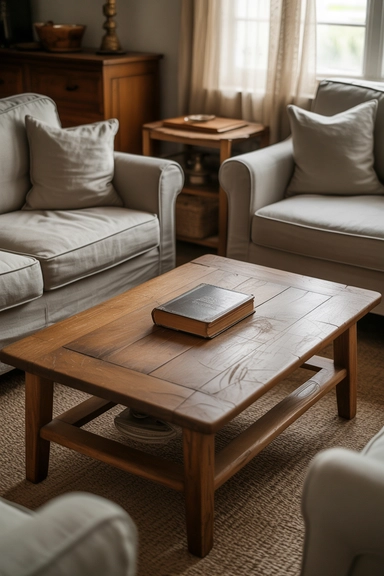
In cottage living room decor ideas, coffee tables serve a functional role before a decorative one. Solid wood tables, painted finishes, or simple vintage pieces work well because they handle daily use without concern. Overly delicate or glossy surfaces tend to feel out of place.
Table size should suit the seating arrangement, leaving enough clearance for movement. Styling should remain minimal—perhaps a tray, a book, or a small lamp. When the table supports everyday habits, it naturally fits the cottage environment.
15. Wall Decor That Feels Personal and Understated
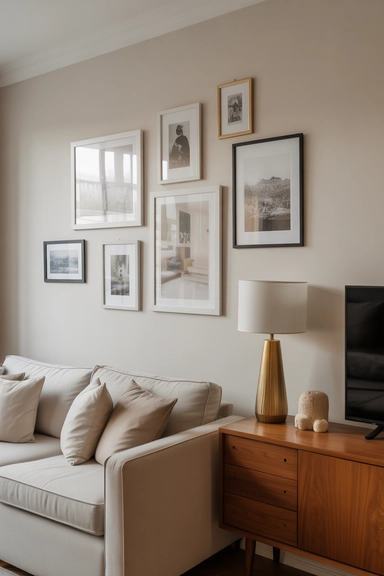
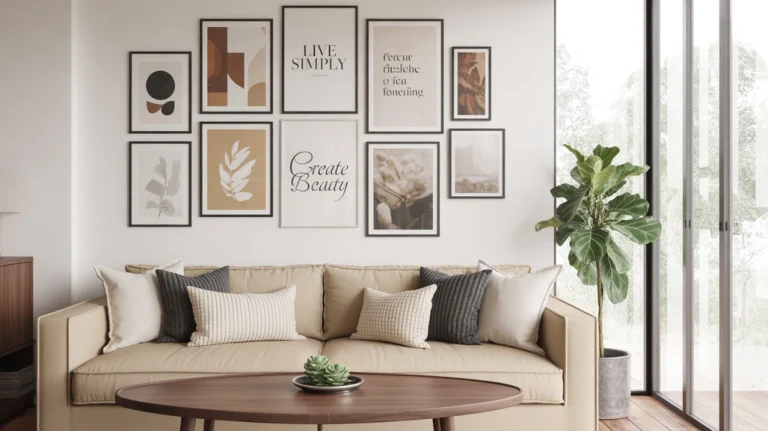
Wall decor in cottage living room decor ideas should reflect personal history rather than design trends. Framed photographs, small artworks, or simple mirrors work best when spaced intentionally. Walls should not feel filled edge to edge.
Avoid large gallery walls that dominate the room. Instead, focus on a few meaningful pieces aligned with furniture placement. When wall decor feels selective and restrained, it adds character without competing with the room’s overall balance.
16. Fireplace Areas That Blend Into Daily Living
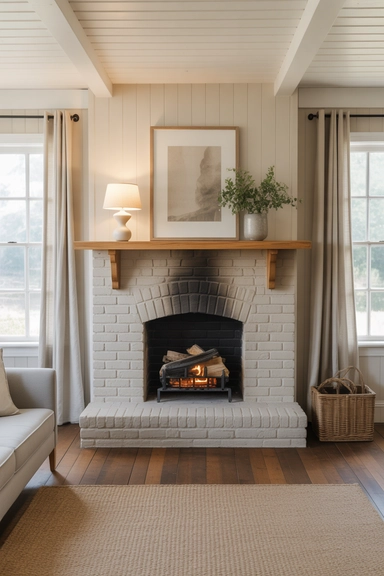
Fireplaces in cottage living room decor ideas are part of everyday life rather than a formal focal point. Surrounds are often simple, using painted brick, stone, or wood mantels. Decoration should remain minimal to keep the fireplace integrated into the room.
Mantels work best when styled lightly with a mirror or a small group of objects. Seating placement should allow easy use of the space year-round. When the fireplace feels practical rather than decorative, it strengthens the room’s sense of familiarity.
17. Storage Solutions That Adapt Over Time
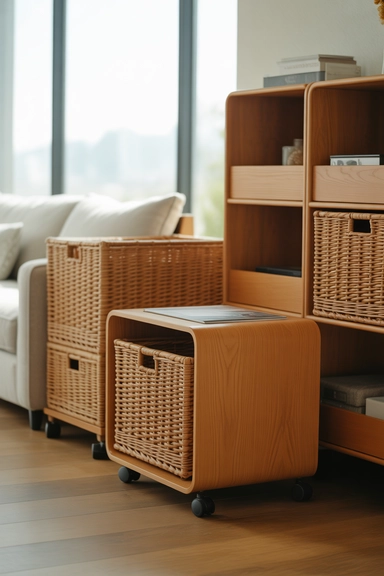
Cottage living room decor ideas benefit from storage that can change as needs shift. Sideboards, baskets, shelves, and cabinets allow flexibility without locking the room into a rigid layout. Storage should support real use, not visual display.
Materials should match the room’s overall tone, favoring wood or painted finishes. Avoid storage pieces that feel oversized or overly decorative. When storage remains adaptable, the room stays functional as routines evolve.
18. Materials That Age Without Losing Appeal
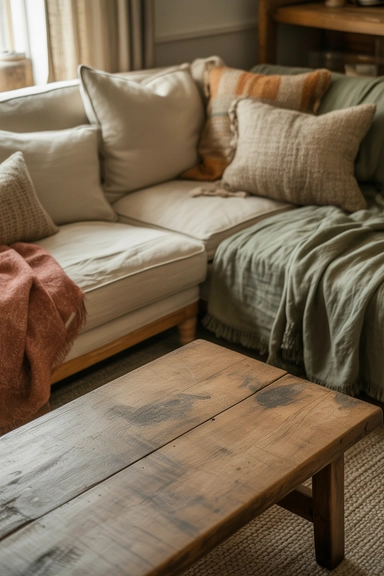
Material choice matters in cottage living room decor ideas because wear is expected. Wood, linen, cotton, and wool tend to age well, developing character rather than damage. These materials support long-term use without constant maintenance.
Avoid finishes that show wear quickly or require careful handling. Surfaces should tolerate daily activity. When materials are chosen for durability and appearance together, the living room remains comfortable and reliable over time.
19. Cottage Living Room Decor Ideas That Support Daily Routines

Cottage living rooms are not display spaces; they are rooms people return to multiple times a day. This means furniture placement must support repeated use without adjustment. Seating near natural light supports reading and handwork. Side tables within arm’s reach support drinks, books, and devices. Task lighting should be positioned for function, not symmetry.
A room that requires rearranging chairs or moving lamps to perform basic activities is poorly designed, fuck. Cottage decor succeeds when the layout quietly supports habits without drawing attention to itself. The room should work at morning, afternoon, and evening without visual or physical friction.
20. Visual Continuity With Adjacent Rooms
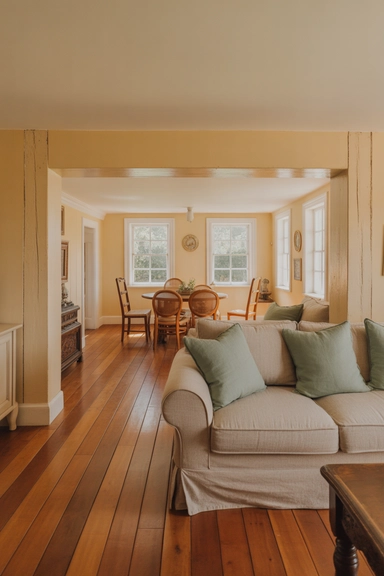
Cottage living room decor ideas must account for how the space connects to surrounding rooms. Abrupt changes in color, flooring, or furniture scale create visual breaks that feel jarring in smaller or older homes. Continuity is achieved through repeating tones, wood finishes, and material types across thresholds.
This does not mean everything must match, fuck. It means transitions should feel intentional. When the living room relates visually to nearby spaces, the home feels cohesive rather than compartmentalized. This continuity reduces visual noise and makes the living room feel settled within the house as a whole.
21. Responding to Irregular Architecture Instead of Fighting It
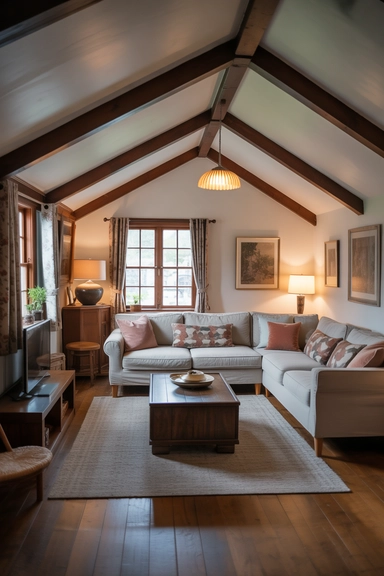
Many cottage living rooms include uneven walls, low ceilings, alcoves, or off-center windows. Good cottage decor responds to these conditions instead of forcing symmetry. Furniture should follow the room’s geometry, not an idealized floor plan.
Placing seating to respect circulation paths and architectural features prevents awkward dead zones, fuck. Ignoring room shape leads to blocked walkways and unusable corners. When furniture placement acknowledges the building’s constraints, the room feels natural, balanced, and far easier to live in.
22. Objects Chosen for Use and Personal History
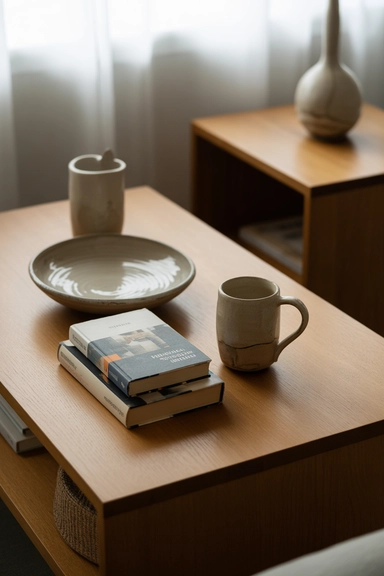
Decorative objects in cottage living rooms should justify their presence through use or meaning. Bowls that hold keys, books that are read, ceramics that are handled regularly belong in the space. Objects chosen purely to “fill” surfaces dilute clarity and create visual clutter.
This is where many rooms fail, fuck. When every surface is styled, nothing stands out. Limiting objects forces better decisions. A few meaningful items placed deliberately create more impact than shelves of unrelated decor. Cottage rooms feel authentic when objects reflect real life.
23. Allowing Empty Space to Do Actual Work
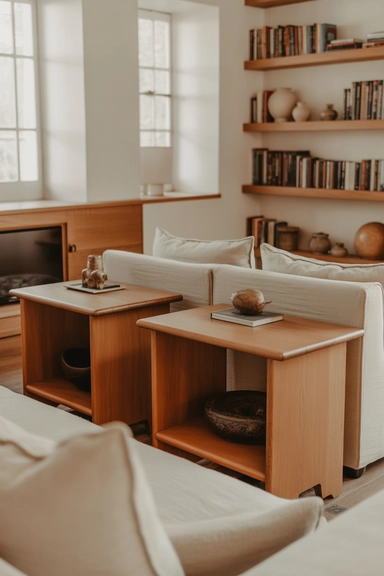
Empty space is not absence; it is structure. Cottage living room decor ideas benefit from surfaces and walls that are not fully occupied. This allows materials, light, and proportions to register clearly. Visual breathing room also makes the space easier to maintain.
Filling every gap with decor is insecurity, fuck. Leaving space requires confidence in the layout and materials. When emptiness is used deliberately, the room feels calmer, clearer, and more adaptable to change without needing constant adjustment.
24. Flexible Pieces That Change Function Over Time
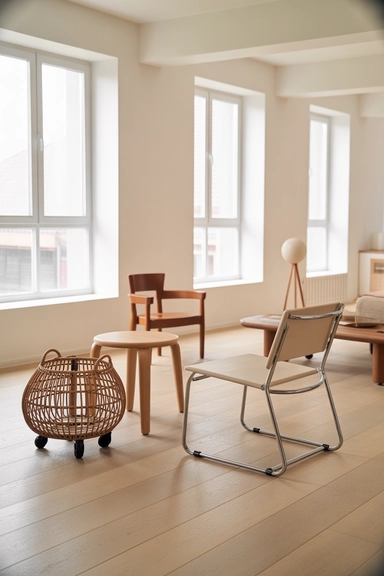
Cottage living rooms function best when some furniture can change roles. A stool that becomes a side table, a basket that moves locations, or a chair that shifts between rooms supports evolving needs. These pieces reduce rigidity in the layout.
This flexibility prevents the room from becoming outdated, fuck. Fixed-purpose furniture locks the space into one way of living. Adaptable pieces allow the room to respond to seasons, routines, and household changes without losing coherence.
25. A Layout That Looks Unstyled Because It Is Used
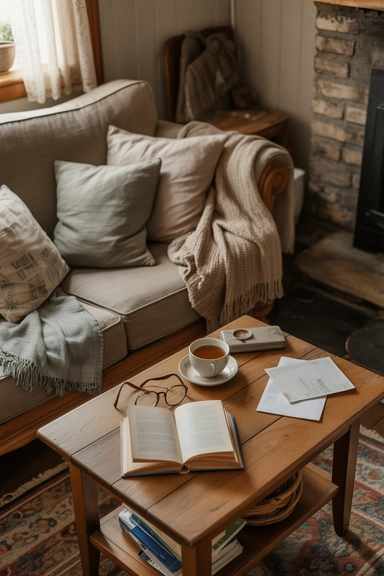
The final measure of successful cottage living room decor ideas is whether the room looks arranged or lived in. Furniture that sits where it is actually used will never look staged. Lighting that exists for function will never feel decorative.
If a room looks perfect but feels awkward to sit in, it has failed, fuck. Cottage living rooms should appear slightly imperfect because they are shaped by daily life. That imperfection is not a flaw; it is proof of use and longevity.
Conclusion
Cottage living room decor ideas succeed when decisions are based on use, proportion, and material behavior rather than appearance alone. Comfort, flexibility, and continuity matter more than styling. When furniture placement supports routines, materials tolerate wear, and decor reflects real life, the room becomes reliable instead of performative. A cottage living room earns its character through time and use, not arrangement. That is what makes it work, and that is what keeps it relevant, fuck.