21 Living Room Flower Decor Ideas for Soft, Natural Style
Introduction
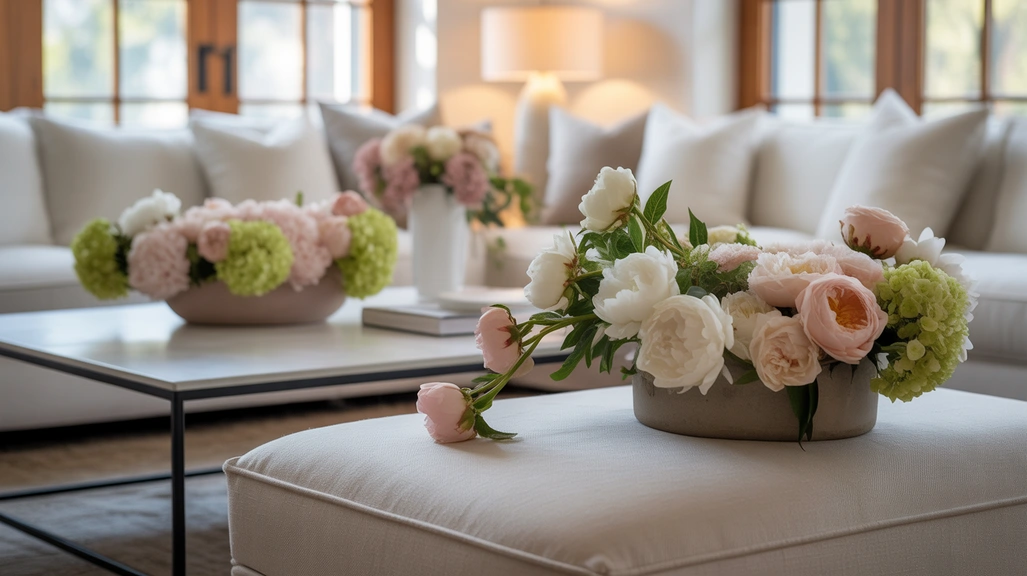
Living room flower decor ideas are most effective when they feel integrated into the space rather than added as decoration. Flowers influence mood, soften architectural lines, and introduce gentle movement that makes a room feel lived-in instead of styled. The key lies in scale, placement, and restraint—allowing floral elements to support the room’s layout without overwhelming it. When used thoughtfully, flowers enhance light, texture, and rhythm across seating areas and surfaces. Many of these ideas work best when layered alongside natural elements already present in the space, especially in rooms styled with a focus on greenery, balance, and flow, similar to approaches used in living room plant decor ideas for a calm.
1. Low Floral Arrangements That Keep Sightlines Clear
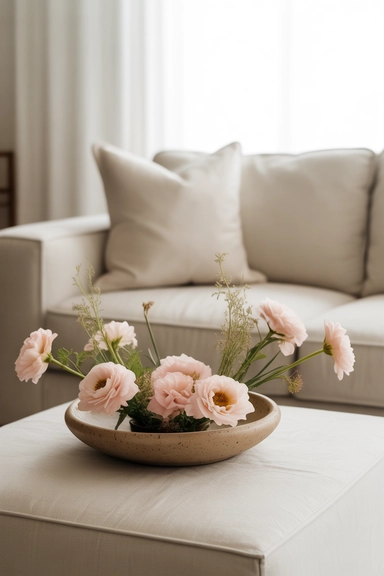
Low flower arrangements work best in seating zones where conversation and openness matter. Placed on coffee tables or ottomans, they add softness without interrupting visual flow across the room. In well-balanced living room flower decor ideas, these arrangements rely on loose composition rather than density. Short-stemmed blooms, gently spilling outward, create an organic shape that feels relaxed and unforced. The goal is to introduce natural presence without turning the arrangement into a focal barrier.
Container choice plays a critical role. Shallow bowls, rounded ceramic vessels, or understated glass bases keep the flowers visually grounded. Avoid overly decorative vases that compete with the blooms themselves. When styled with restraint, low arrangements subtly connect seating elements and encourage the eye to move comfortably through the space rather than stopping abruptly at the table’s surface.
2. Single-Stem Styling for a Quiet, Intentional Look
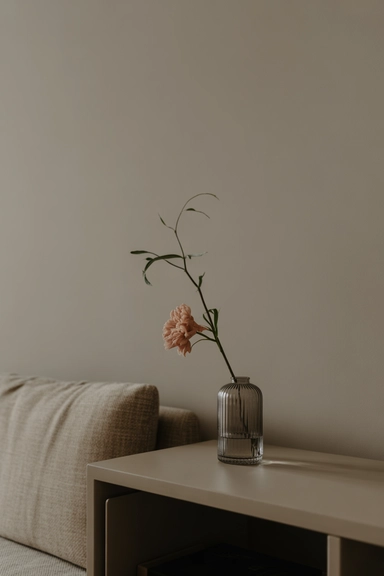
Single-stem flower styling is one of the most understated approaches to floral decor. A single bloom placed in a slim vase allows form, color, and negative space to work together. In refined living room flower decor ideas, this method emphasizes intention rather than abundance. One carefully chosen stem can soften a shelf, console, or side table without adding visual noise or distraction.
This approach works particularly well in rooms that already rely on texture and material for interest. A solitary flower becomes a quiet accent rather than decoration. The surrounding space matters as much as the flower itself, so allow breathing room around the vase. This restraint keeps the arrangement feeling calm, thoughtful, and aligned with a soft, natural aesthetic.
3. Using Neutral Vases to Let Flowers Take the Lead
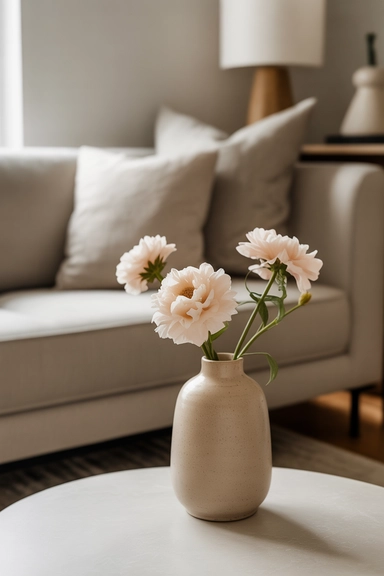
Flowers naturally draw attention, which makes neutral vases an essential tool for balance. Soft ceramics, stoneware, or clear glass allow the blooms to remain the focus without competing elements. In effective living room flower decor ideas, the vase supports the arrangement rather than defining it. Neutral finishes also help flowers blend seamlessly with surrounding furniture and textures.
Placement should enhance light and contrast. Positioning a neutral vase near natural daylight highlights petal shape and subtle color variation. Avoid clustering multiple floral arrangements too closely, as this can feel busy. One well-placed arrangement often creates more impact than several scattered pieces, maintaining visual calm while still introducing organic beauty.
4. Loose, Asymmetrical Arrangements for a Natural Feel
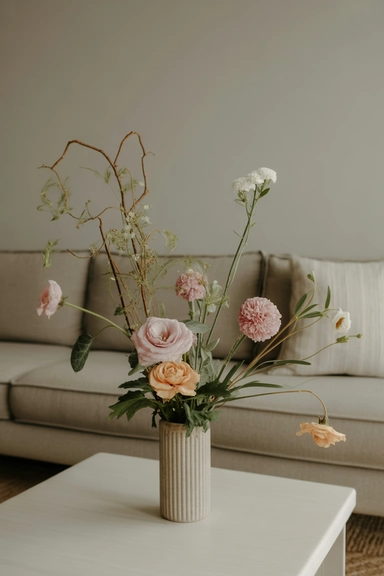
Perfect symmetry can make floral decor feel formal or staged. Loose, asymmetrical arrangements better reflect how flowers grow in nature, which aligns with a softer interior style. In thoughtful living room flower decor ideas, this approach adds movement and authenticity. Slight variations in stem height and direction create visual interest without requiring bold colors or large volumes.
The key is restraint, not disorder. Even asymmetrical arrangements need structure, with a clear center of gravity. Use fewer blooms and allow space between them. This keeps the arrangement light and breathable, enhancing the room’s overall flow rather than interrupting it with overly dense decoration.
5. Flower Placement That Complements Furniture Lines
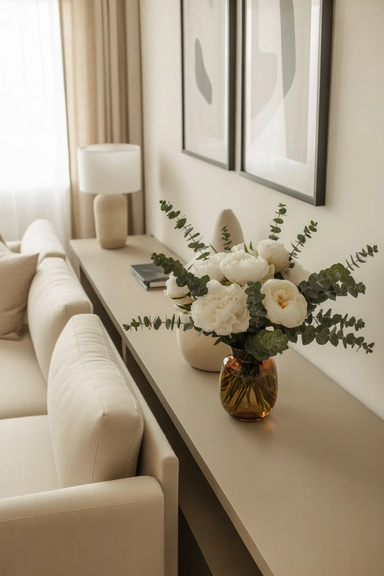
Flowers should respond to the room’s existing lines rather than ignore them. Arrangements placed near sofas, chairs, or consoles should echo surrounding proportions. In balanced living room flower decor ideas, taller blooms often work near vertical elements, while compact arrangements suit low furniture. This alignment creates harmony between floral decor and the room’s structure.
Avoid placing flowers where they visually collide with lamps, artwork, or mirrors. Instead, let them fill transitional gaps where softness is needed. Thoughtful placement ensures flowers feel integrated into the room’s layout, enhancing balance and cohesion rather than appearing as decorative afterthoughts.
6. Seasonal Flowers Used With Subtle Restraint
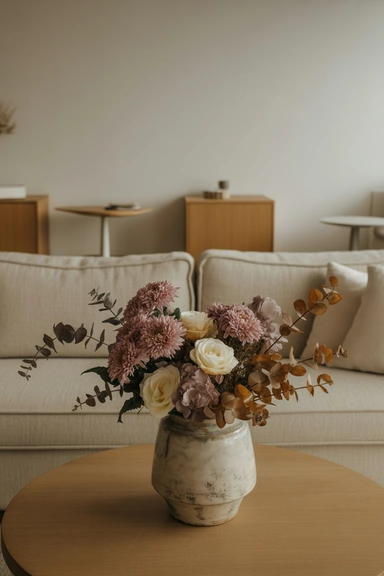
Seasonal flowers bring freshness to a living room, but they work best when the shift feels gentle rather than thematic. Instead of dramatic color changes, focus on tonal variation and texture that reflects the season naturally. In thoughtful living room flower decor ideas, seasonal blooms are chosen for their form and softness, not novelty. This keeps the room feeling consistent while still acknowledging change throughout the year.
Limiting seasonal updates to one or two arrangements helps preserve visual balance. Reusing the same vase while changing flowers maintains continuity and prevents the space from feeling redecorated. This approach allows seasonal flowers to enhance atmosphere without disrupting the room’s established rhythm or calm.
7. Side Table Flower Styling That Feels Intimate
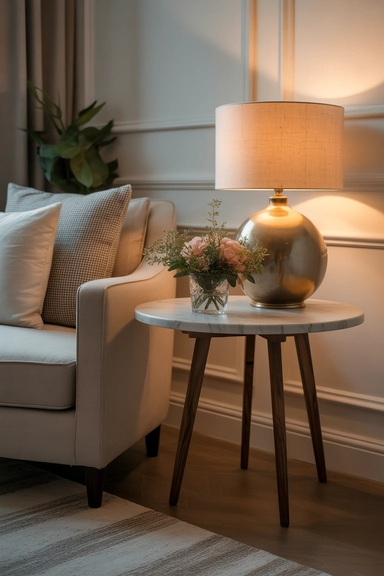
Side tables offer an opportunity for floral moments that feel personal rather than decorative. A small arrangement placed beside seating adds warmth without pulling attention away from comfort. In refined living room flower decor ideas, side table flowers remain low and loosely composed, supporting relaxation rather than visual emphasis.
The container should feel secondary to the setting. Simple ceramic or glass vases work best, allowing the flowers to soften the seating area naturally. Avoid crowding the table with additional objects. A single floral element paired with negative space keeps the area functional while adding a gentle, welcoming presence.
8. Coffee Table Flowers That Support Flow and Use
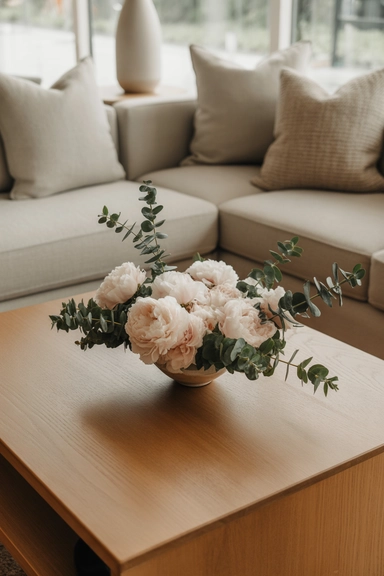
Coffee table arrangements should enhance the center of the room without interrupting movement or conversation. Low-profile flowers placed off-center help maintain openness across seating. In balanced living room flower decor ideas, these arrangements act as visual connectors rather than focal points, encouraging easy interaction.
Loose blooms with soft shapes work better than tightly structured bouquets. The goal is to introduce organic movement without visual weight. Keeping arrangements minimal ensures the table remains practical for daily use while still benefiting from the calming presence of flowers.
9. Flower Styling on Consoles for Visual Balance
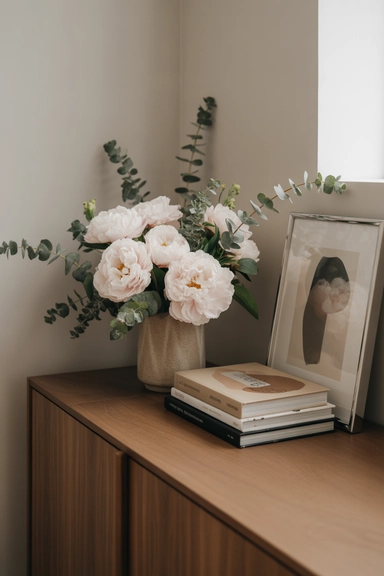
Console tables naturally guide the eye, making them ideal for controlled floral placement. A medium-height arrangement placed slightly off-center adds softness while maintaining structure. In intentional living room flower decor ideas, console flowers work in partnership with books, art, or lighting rather than competing with them.
Spacing is essential. Flowers should not overlap mirrors or artwork visually. Instead, they should occupy transitional zones where the eye needs relief. This measured placement keeps the console composed and prevents floral elements from overwhelming the surface.
10. Minimal Flower Groupings That Avoid Clutter
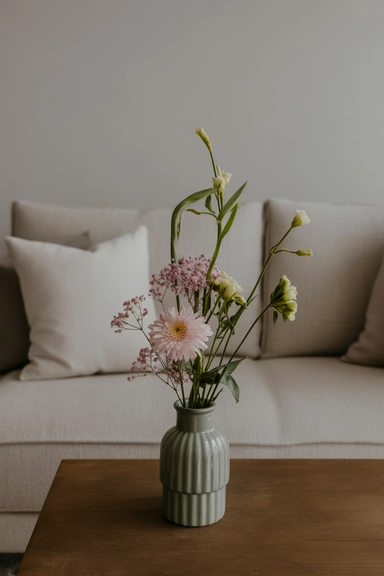
Using multiple flowers does not require multiple arrangements. Grouping a few stems within one vase often feels calmer than scattering them across surfaces. In clean living room flower decor ideas, this method reduces clutter while still providing presence and texture.
Choose flowers with varied stem lengths to create gentle movement within a single container. Avoid mixing too many colors or species, which can feel busy. A restrained grouping maintains clarity and supports a soft, natural aesthetic that encourages repeated appreciation rather than immediate attention.
11. Using Flowers to Soften Hard Architectural Edges
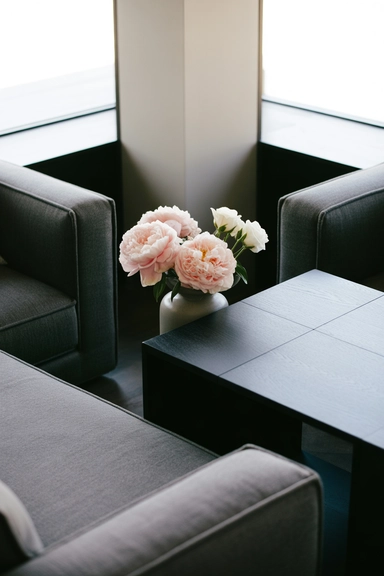
Rooms with strong architectural lines can feel visually rigid without organic contrast. Flowers help soften these edges when placed near sharp corners, angular furniture, or structured shelving. In considered living room flower decor ideas, floral arrangements act as gentle transitions, easing the eye between hard surfaces and soft furnishings. The goal is not to decorate the architecture, but to relieve its intensity through natural form.
Loose blooms with rounded petals work best in these areas. Avoid stiff, vertical arrangements that mimic the same rigidity you are trying to soften. Placement should feel supportive rather than central, allowing the flowers to calm the space without drawing focus away from the room’s overall layout.
12. Neutral-Toned Flowers for Calm, Layered Spaces
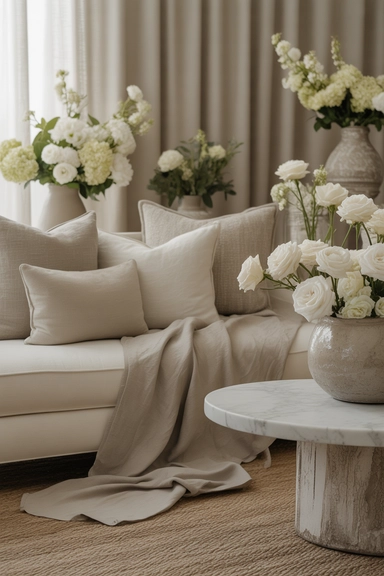
Neutral-toned flowers are ideal for living rooms built around texture rather than color. Soft whites, creams, muted blush, or pale greens blend effortlessly with layered interiors. In refined living room flower decor ideas, these tones add depth without disrupting the palette. The flowers feel integrated, enhancing warmth rather than introducing contrast.
The arrangement should remain understated. Let texture and shape do the work instead of color intensity. Pairing neutral flowers with simple vessels keeps the look cohesive and timeless. This approach supports calm, livable spaces that feel intentional rather than styled for impact.
13. Shelf Styling With Flowers That Feel Light and Intentional
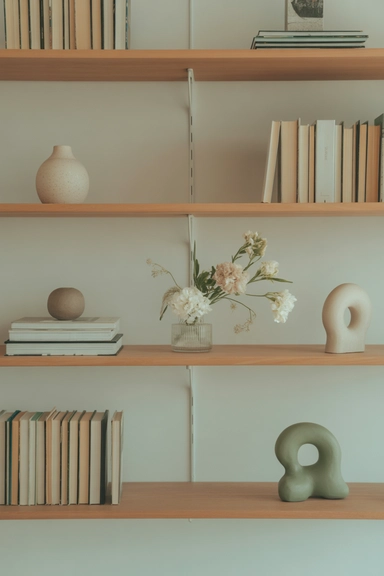
Open shelves benefit from floral elements that introduce vertical movement without overcrowding. A small arrangement placed among books or objects helps break horizontal repetition. In balanced living room flower decor ideas, shelf flowers should feel like part of a curated composition rather than decorative fillers.
Scale is essential. Choose compact arrangements that complement surrounding items instead of competing with them. Allow breathing room on either side to preserve visual clarity. This restraint keeps shelves feeling curated and calm, encouraging the eye to move naturally rather than stopping abruptly.
14. Using Flowers to Create Gentle Color Transitions
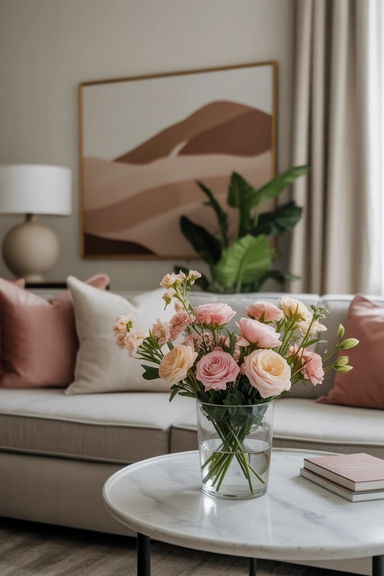
Flowers can bridge subtle color shifts within a living room, connecting tones used in textiles, artwork, or furniture. In thoughtful living room flower decor ideas, blooms echo existing hues rather than introducing new ones. This creates a smooth visual transition that feels cohesive and deliberate.
Avoid bold contrasts unless the room is already designed around strong color. Soft repetition works better than statement tones. When flowers quietly reinforce the palette, they enhance harmony and help the space feel complete without appearing styled or overly intentional.
15. Letting Negative Space Define Floral Impact
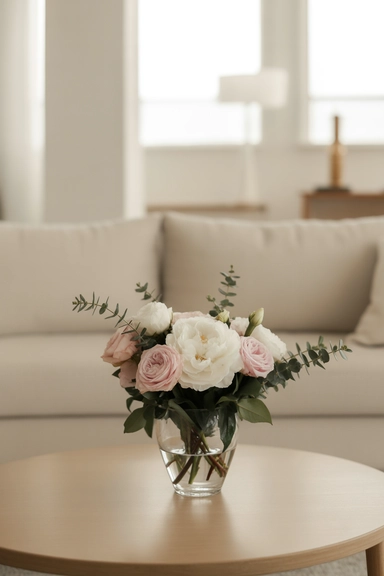
Negative space plays a crucial role in how flowers are perceived. An arrangement surrounded by openness feels intentional and refined, while crowded placements dilute its impact. In strong living room flower decor ideas, space around the flowers is treated as part of the composition.
Resist the urge to fill every surface. One arrangement with room to breathe often creates more presence than several competing elements. Allowing flowers to exist within open space reinforces calm, clarity, and balance—qualities that define soft, natural living room styling.
16. Tall Flower Arrangements That Add Vertical Balance
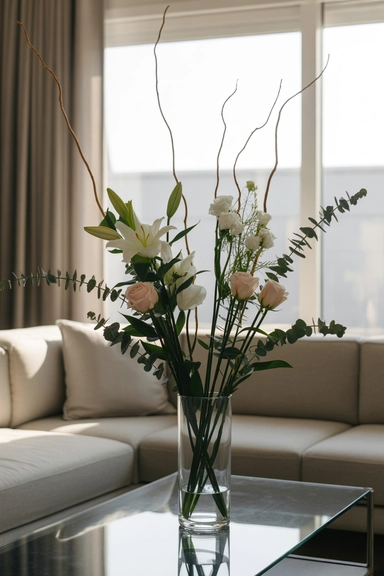
Tall flower arrangements are most effective when they respond to vertical gaps in the room rather than dominating surfaces. Placed near windows, beside consoles, or at the edge of seating areas, they guide the eye upward and counterbalance low furniture. In well-considered living room flower decor ideas, height is used to restore proportion, not to create drama. Long stems with gentle movement feel lighter and more natural than dense, upright bouquets.
The container should remain understated so the height feels intentional, not heavy. Slim vases in neutral materials help keep the arrangement visually grounded. Avoid placing tall flowers where they intersect artwork or lighting, as this disrupts flow. When positioned carefully, vertical arrangements quietly strengthen the room’s overall balance.
17. Flowers Paired With Natural Materials for Cohesion
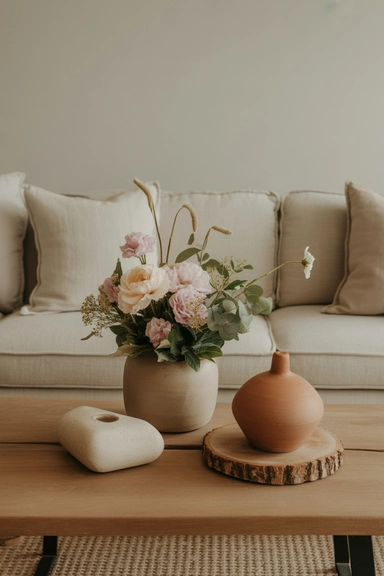
Flowers feel most at home when paired with materials that echo their organic origin. Wood, linen, clay, and stone create a natural backdrop that enhances floral softness. In cohesive living room flower decor ideas, this pairing builds harmony rather than contrast. The flowers appear integrated into the room’s material language instead of standing apart as decoration.
Placement near tactile surfaces enhances this effect. A vase on a wooden table or beside textured upholstery allows the arrangement to feel grounded. Avoid glossy or overly ornate surroundings that compete for attention. This approach keeps the floral styling calm, unified, and visually connected to the rest of the space.
18. Casual Arrangements That Feel Lived-In, Not Styled
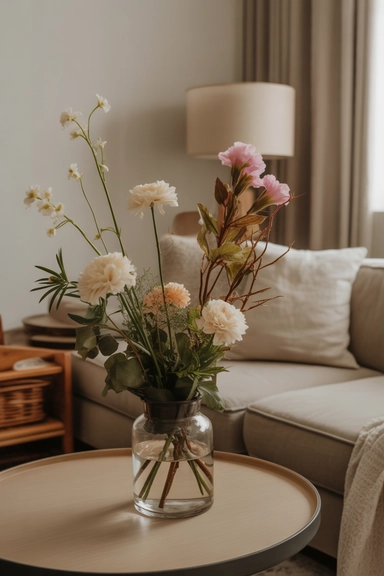
Overly polished floral arrangements can make a living room feel staged. Casual compositions, on the other hand, introduce ease and authenticity. In relaxed living room flower decor ideas, flowers appear loosely gathered, with slight variation in height and direction. This natural imperfection aligns with how the space is actually used.
The goal is effortlessness, not disorder. Choose fewer stems and let them fall naturally within the vase. Avoid rigid symmetry or tight clustering. This softer approach helps the room feel welcoming and lived-in, encouraging comfort rather than admiration from a distance.
19. Using Flowers to Anchor Transitional Areas
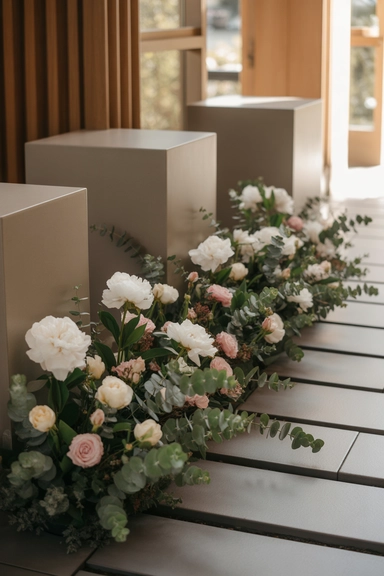
Transitional zones such as walkways, edges of seating groups, or spaces between furniture can feel visually undefined. Flowers help anchor these areas without requiring additional furniture. In thoughtful living room flower decor ideas, a simple arrangement placed at these junctions provides a sense of pause and intention.
Scale should remain modest. The flowers are there to guide movement, not stop it. Choose arrangements that complement nearby elements and avoid obstructing circulation. When used this way, flowers subtly organize the room while preserving openness and flow.
20. Limiting Flower Count to Preserve Visual Calm
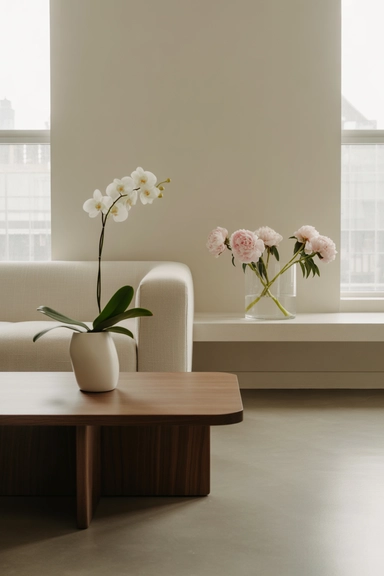
More flowers do not necessarily mean better styling. In fact, limiting the number of arrangements often strengthens their impact. In refined living room flower decor ideas, one or two well-placed floral moments feel calmer than multiple competing displays. This restraint allows each arrangement to be appreciated fully.
Reducing quantity also supports visual clarity. The room feels easier to read, with fewer interruptions. Focus on placement and proportion rather than coverage. This disciplined approach keeps floral decor from becoming clutter and reinforces a soft, natural atmosphere.
21. Allowing Flowers to Evolve Naturally Over Time
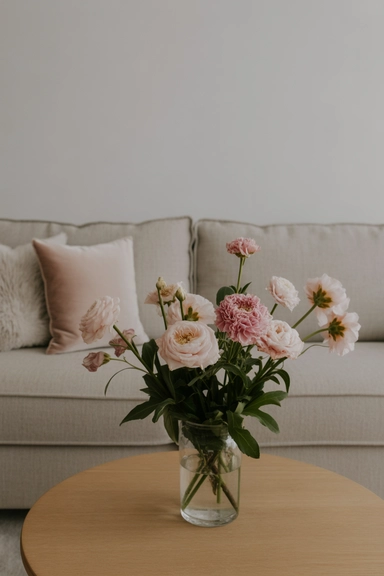
Flowers change as they age, and allowing this process to show can add quiet character to a living room. Slightly opening blooms or gently drooping stems contribute to a lived-in feel. In authentic living room flower decor ideas, perfection is not the goal—presence is.
Avoid replacing arrangements too quickly. Letting flowers exist through their natural stages reinforces ease and realism. This acceptance of imperfection aligns with a calm interior mindset, making the space feel approachable and human rather than styled for display.
Conclusion
Living room flower decor ideas are most successful when they support the room’s rhythm instead of competing with it. Thoughtful placement, restrained quantity, and natural compositions allow flowers to enhance atmosphere without overwhelming the space. By focusing on proportion, material harmony, and negative space, floral elements become quiet contributors to comfort and balance. When flowers are used with intention and ease, they create a living room that feels soft, natural, and welcoming—one that evolves gracefully and invites people to return again and again.